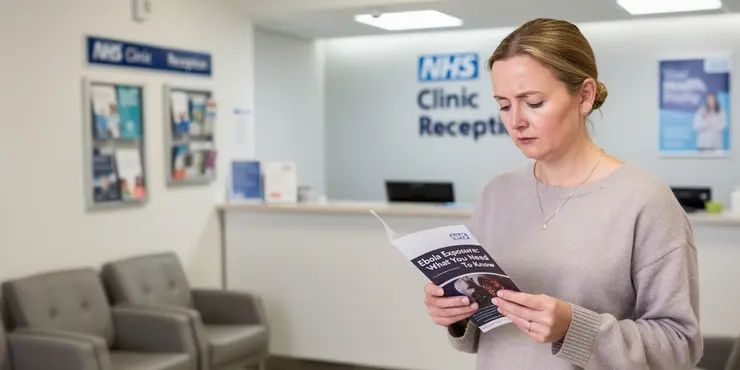

Get Answers
Can you go to work after Ebola exposure?
If you have been exposed to Ebola, you should not just carry on as normal and go to work without advice. In the UK, you should contact NHS 111, your GP, or your local health protection team straight away. They will assess your exposure risk and tell you whether you need to stay off work.
The advice depends on how you were exposed and whether you have any symptoms. If you are a healthcare worker or you had close contact with someone who had Ebola, you may be asked to monitor yourself closely and avoid certain activities. In some situations, you may need to self-isolate or follow public health instructions.
What to do while you are waiting to see if you get sick
Watch for symptoms every day for 21 days after your last possible exposure. Early symptoms can include fever, headache, sore throat, muscle pain, tiredness, vomiting, diarrhoea, and abdominal pain. If you feel unwell, do not go to work.
Take your temperature if you have been advised to do so, and keep a record of how you feel. It is sensible to reduce contact with other people, especially if you work with vulnerable groups. Follow any instructions from public health professionals exactly.
Avoid sharing personal items, and do not donate blood, plasma, or organs during the monitoring period. If you are told to stay at home, do so even if you feel well. This helps protect colleagues, family, and the wider public.
What to tell your employer
Let your employer know that you may have been exposed to Ebola as soon as possible. You do not need to share unnecessary personal details, but you should explain that you are waiting for public health advice. Your employer may need to make temporary arrangements for your shift or duties.
If you work in healthcare, childcare, social care, or another public-facing role, your employer may need to assess the risks carefully. They may ask you to stay away from work until the monitoring period has ended, depending on the exposure. Following occupational health advice is important.
When to get urgent help
If you develop a fever or any possible Ebola symptoms, stay away from others immediately and seek urgent medical advice. Call NHS 111 and tell them about the Ebola exposure before you go anywhere. Do not use public transport or attend work, a GP surgery, or A&E unless you are told to do so.
If you become very unwell, call 999 and explain the situation clearly. Mention your travel history or exposure history before any face-to-face contact. Early action makes it easier to protect you and the people around you.
Frequently Asked Questions
A person should follow public health guidance immediately, tell their employer and healthcare provider about the exposure, and monitor for symptoms exactly as instructed. Whether they can continue working depends on the level of exposure, local health department rules, job duties, and whether they can safely isolate from others if symptoms begin.
It may or may not be safe, depending on the exposure risk and the workplace setting. In many situations, public health officials may restrict work, especially if the job involves close contact with others or healthcare duties. The safest approach is to follow the instructions of the local health department and occupational health team.
Sometimes a person may be allowed to work only if public health authorities determine the exposure was low risk and the job can be done with strict monitoring and precautions. If working is permitted, the person should watch for fever or other symptoms, avoid unnecessary close contact, and leave work immediately if symptoms develop.
Symptoms to watch for include fever, severe headache, weakness, muscle pain, fatigue, sore throat, vomiting, diarrhea, stomach pain, and unexplained bleeding or bruising. Anyone with these symptoms after exposure should stop working, isolate, and contact a healthcare provider or public health authority right away.
The decision is usually made by local public health authorities, occupational health professionals, and the employer, based on the exposure details and current guidance. A healthcare provider may also advise on medical monitoring and whether the person should stay home.
Monitoring is generally based on the Ebola incubation period, which can be up to 21 days after exposure. Public health officials may require temperature checks and symptom monitoring during that entire period or for the duration they specify.
Not having a fever does not automatically mean it is safe to work. Some exposed people may be allowed to work only under public health supervision, but others may need to stay home depending on the exposure and workplace risk. Fever monitoring alone is not enough; all symptoms and instructions must be followed.
Precautions may include daily symptom checks, temperature monitoring, staying away from high-risk settings, reporting any illness immediately, and following any required workplace infection-control measures. The exact precautions depend on the exposure and the guidance from public health authorities.
An employer should not make the decision alone without considering public health guidance and occupational health advice. If the employee is under monitoring after a significant exposure, the employer may need to restrict duties, adjust work arrangements, or keep the employee out of the workplace to protect others.
Healthcare workers may face stricter restrictions because they can expose vulnerable patients and coworkers. Whether they can work depends on the type of exposure, the role they perform, and local health department instructions. Many healthcare workers with meaningful exposure are closely monitored and may be temporarily removed from direct patient care.
They should leave work immediately, avoid contact with others, notify their supervisor, and contact public health or a healthcare provider for urgent instructions. They should not use public transport if avoidable and should follow guidance for safe transport and evaluation.
If working is permitted, public health guidance may still advise avoiding crowded public transportation if symptoms could develop or if the exposure is high risk. The person should ask local health officials about the safest way to travel to and from work and what to do if symptoms appear.
It depends on the exposure level and current public health recommendations. Some people may need to quarantine or self-monitor at home, while others may be allowed to work under active monitoring and restrictions. Local health authorities determine the correct approach.
Family members can be better protected by following monitoring instructions, minimizing close contact if symptoms appear, and promptly reporting any illness. If public health officials advise restrictions, the person should follow them carefully to reduce the chance of household spread.
Low-risk exposure usually means there was little chance of contact with infectious bodily fluids, while high-risk exposure may involve direct contact with blood or body fluids or unsafe handling of contaminated materials. High-risk exposure is more likely to lead to work restrictions, active monitoring, or quarantine.
The employer should protect the employee's medical privacy and share only information necessary for workplace safety. Details about the exposure and monitoring should be handled discreetly, consistent with health privacy laws and company policy.
Working from home may be a safer option in some cases because it reduces contact with others. However, the person still must follow public health monitoring instructions and should stop working and seek medical advice if symptoms develop.
Paperwork may include occupational health forms, symptom monitoring logs, public health orders, and employer attendance or accommodation records. The exact documents depend on workplace policy and local health department requirements.
Emergency care should be sought immediately if the person develops severe symptoms such as significant bleeding, trouble breathing, confusion, fainting, or signs of shock. They should call ahead before arriving so the facility can prepare appropriate infection-control measures.
The safest advice is to follow local public health instructions, monitor for symptoms for the full recommended period, and do not assume it is safe to work without official guidance. If any symptoms appear, stop working immediately and seek medical and public health advice right away.

Ergsy Search Results
This website offers general information and is not a substitute for professional advice.
Always seek guidance from qualified professionals.
If you have any medical concerns or need urgent help, contact a healthcare professional or emergency services immediately.
Some of this content was generated with AI assistance. We've done our best to keep it accurate, helpful, and human-friendly.
- Ergsy carefully checks the information in the videos we provide here.
- Videos shown by Youtube after a video has completed, have NOT been reviewed by ERGSY.
- To view, click the arrow in centre of video.
- Most of the videos you find here will have subtitles and/or closed captions available.
- You may need to turn these on, and choose your preferred language.
- Go to the video you'd like to watch.
- If closed captions (CC) are available, settings will be visible on the bottom right of the video player.
- To turn on Captions, click settings.
- To turn off Captions, click settings again.