
Get Answers
Can food banks help with special dietary needs?
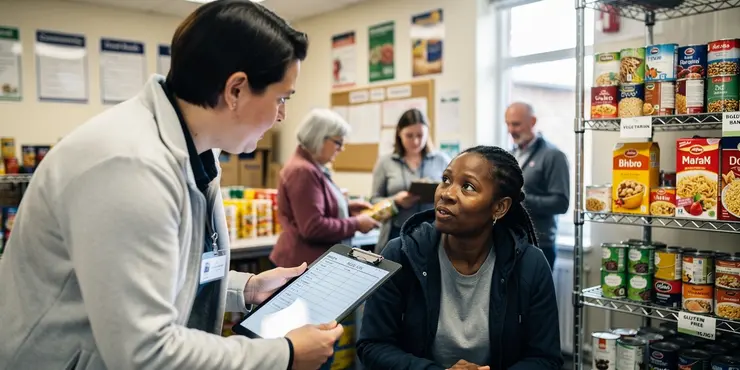
Yes, many food banks in the UK can help if you have special dietary needs. This may include medical, religious, cultural, or lifestyle requirements such as gluten-free, vegan, halal, kosher, dairy-free, low-sugar, or no-pork items.
Support can vary from one food bank to another. Some places have a small choice of food, while others may be able to set aside certain products if you explain your needs in advance.
What to tell the food bank
When you contact a food bank, let them know exactly what you need. For example, you might need foods that are suitable for diabetes, coeliac disease, allergies, or baby feeding needs.
It is also helpful to mention any foods you cannot eat, even if it seems obvious. This gives staff or volunteers a better chance of offering safe options and avoiding items that may not be suitable.
What kind of help may be available
Some food banks can provide a parcel that avoids certain ingredients. Others may be able to swap items from the standard parcel or include a few suitable alternatives.
In some areas, you may find larger food banks or community projects with more specialist stock. These can sometimes offer tinned goods, pasta, cereal, UHT milk, or store cupboard items that fit your dietary needs.
What to do if your needs are urgent
If your dietary need is linked to a health condition, tell the food bank as soon as possible. If you need food urgently, they may be able to prioritise your parcel or refer you to a local service that can help more quickly.
If you have allergies or a medical condition, check labels carefully and never assume a product is safe. If you are unsure, ask the food bank for ingredient information before taking the item home.
Other support you can ask for
Some food banks can refer you to local advice services, debt support, or welfare help. This can be useful if your need for specialist food is part of a wider money problem.
You may also be able to ask a GP, health visitor, social worker, or support worker for help finding the right food bank. They may know which services in your area are more likely to meet special dietary needs.
Tips for making the process easier
Contact the food bank before you visit if you can. This gives staff time to check what they have and prepare a parcel that is more suitable for you.
Bring any referral details, allergy information, or proof of dietary requirements if you have it. Even if you do not have paperwork, it is still worth asking for help, as many food banks will do what they can.
Frequently Asked Questions
Food bank special dietary needs services provide groceries and pantry items that meet medical, cultural, religious, allergy-related, or other nutritional restrictions.
Eligibility for food bank special dietary needs assistance usually depends on household income, local residency, and the specific dietary requirement being requested.
You can request food bank special dietary needs support by contacting the food bank, explaining the dietary restriction, and sharing any required documentation if asked.
Some food banks may ask for proof of address, income information, a doctor’s note, or a list of allergens or dietary restrictions for food bank special dietary needs requests.
Yes, food bank special dietary needs may include gluten-free foods for people with celiac disease, gluten intolerance, or other medically required diets.
Yes, food bank special dietary needs can include dairy-free foods for people with lactose intolerance, milk allergy, or other dairy restrictions.
Yes, food bank special dietary needs can include low-sodium foods for people managing high blood pressure, heart disease, or kidney conditions.
Yes, food bank special dietary needs can include diabetic-friendly foods such as low-sugar items, whole grains, and balanced meal options.
Yes, food bank special dietary needs can include nut-free foods for people with peanut or tree nut allergies, depending on local availability and handling practices.
Yes, food bank special dietary needs can include vegetarian foods, including meat-free proteins, grains, vegetables, and shelf-stable staples.
Yes, food bank special dietary needs can include vegan foods that contain no animal products, if the food bank has those items available.
Yes, food bank special dietary needs can include halal foods when the food bank can source items that meet halal requirements.
Yes, food bank special dietary needs can include kosher foods if the food bank can provide certified or appropriate kosher items.
Food bank special dietary needs are often handled by storing items separately, labeling them clearly, and using careful packing practices to reduce cross-contamination risks.
If food bank special dietary needs items are not available, ask about substitute foods, referral programs, emergency pantry options, or future distribution dates.
Yes, food bank special dietary needs can often be accommodated for children, especially when a parent or caregiver explains the child’s allergies or medical restrictions.
Yes, food bank special dietary needs can often be accommodated for seniors, including softer foods, low-sodium items, or medically appropriate pantry choices.
Some food bank special dietary needs services offer fresh produce, which can be helpful for people following low-sodium, diabetic-friendly, vegetarian, or allergy-aware diets.
How often you can receive food bank special dietary needs assistance depends on the food bank’s schedule, inventory, and household situation.
You can find food bank special dietary needs resources near you by contacting local food banks, community health centers, or social service agencies and asking about dietary-specific programs.

Ergsy Search Results
This website offers general information and is not a substitute for professional advice.
Always seek guidance from qualified professionals.
If you have any medical concerns or need urgent help, contact a healthcare professional or emergency services immediately.
Some of this content was generated with AI assistance. We've done our best to keep it accurate, helpful, and human-friendly.
- Ergsy carefully checks the information in the videos we provide here.
- Videos shown by Youtube after a video has completed, have NOT been reviewed by ERGSY.
- To view, click the arrow in centre of video.
- Most of the videos you find here will have subtitles and/or closed captions available.
- You may need to turn these on, and choose your preferred language.
- Go to the video you'd like to watch.
- If closed captions (CC) are available, settings will be visible on the bottom right of the video player.
- To turn on Captions, click settings.
- To turn off Captions, click settings again.