
Speak To An Expert
Get clear, personalised advice for your situation.
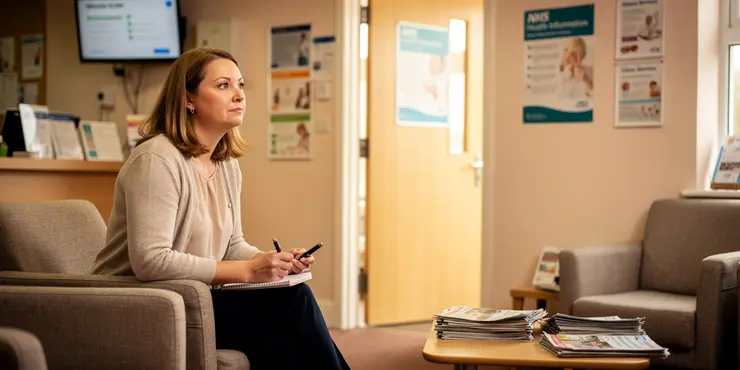
Jot down a few questions to make the most of your conversation.
More Items From Ergsy search
-
Will the first appointment include tests?
Relevance: 100%
-
Can I bring someone with me to the appointment?
Relevance: 99%
-
How should I prepare for a Botox appointment?
Relevance: 98%
-
What should I bring to my first appointment?
Relevance: 98%
-
Should I consider appointment availability?
Relevance: 97%
-
How can I get a COVID jab appointment?
Relevance: 97%
-
How do I book an appointment for the flu vaccine?
Relevance: 97%
-
What happens if I miss my NHS dental appointment?
Relevance: 96%
-
What happens after I contact the office and book the appointment?
Relevance: 96%
-
Can I get a dentist appointment on the NHS?
Relevance: 96%
-
Should I avoid eating or drinking before my appointment?
Relevance: 96%
-
How do I schedule a prostate screening appointment?
Relevance: 94%
-
How long does it usually take to get a urology appointment?
Relevance: 93%
-
Who appoints the Chief Law Officer for England and Wales in the UK?
Relevance: 92%
-
What to expect when contacting a urologist for an appointment
Relevance: 92%
-
A Radiotherapy appointment in east and North Hertfordshire
Relevance: 92%
-
Derbyshire Diabetic Eye Screening - Your Screening Appointment
Relevance: 92%
-
Can children get NHS dentist appointments?
Relevance: 92%
-
What should I bring to my NHS dental appointment?
Relevance: 92%
-
Derbyshire Diabetic Eye Screening - Assessment Clinic Appointment
Relevance: 91%
-
What information should I have ready when making the appointment?
Relevance: 91%
-
How long will I have to wait for an NHS dental appointment?
Relevance: 91%
-
What are my rights if I can’t get an NHS appointment?
Relevance: 90%
-
How long does it take to get an appointment with a menopause specialist?
Relevance: 90%
-
What should I do if I miss my second COVID jab appointment?
Relevance: 87%
-
Who can be appointed as an attorney under a Lasting Power of Attorney?
Relevance: 86%
-
Are all dental appointments free on the NHS?
Relevance: 86%
-
Post Menopausal Bleeding Clinic | A Guide to What Happens at An Appointment
Relevance: 85%
-
What questions should I ask during the first appointment?
Relevance: 85%
-
Your Ultrasound Appointment
Relevance: 84%
-
Autism Assessment - What Happens in Your Appointment
Relevance: 82%
-
Your abdominal aortic aneurysm (AAA) screening appointment
Relevance: 80%
-
Can I get an emergency NHS dental appointment?
Relevance: 77%
-
NHS to Expand Digital Health Services to Reduce Appointment Backlogs
Relevance: 77%
-
MRI Scanner walkthrough - what to expect at your appointment
Relevance: 76%
-
What to expect from your Colposcopy appointment
Relevance: 66%
-
How can I find an NHS dentist for an appointment?
Relevance: 62%
-
Can I have more than one attorney in an LPA?
Relevance: 57%
-
Should I mention past surgeries or medical conditions when scheduling?
Relevance: 55%
-
Get cancer symptoms checked by your GP | NHS - BSL version
Relevance: 55%
Can I bring someone with me?
In many cases, yes, you can bring someone with you to an appointment. This might be a partner, family member, friend, carer, or support worker. Having someone with you can help you feel more comfortable and make it easier to remember what was discussed.
Whether this is allowed can depend on the type of appointment, the place you are visiting, and any rules about privacy or safety. It is always a good idea to check in advance, especially if the appointment is with a GP, hospital, dentist, solicitor, or government office.
Why you might want to bring someone
Many people find it helpful to have another person there for support. They may be able to help explain things, take notes, or ask questions you might forget. This can be especially useful if you are feeling anxious, unwell, or under a lot of stress.
If you have a disability, long-term condition, or communication difficulty, you may be able to bring a companion as part of reasonable adjustments. In healthcare settings, staff should try to support your needs where possible. If you need extra help, let the service know before your appointment.
When there may be limits
Sometimes only one person can come in with you, especially if the room is small or the appointment is sensitive. There may also be limits if the appointment involves an examination, confidential information, or safeguarding concerns. Staff may ask your guest to wait outside for part of the appointment.
In some cases, children or extra visitors may not be allowed. This is common in clinics and busy hospitals, where space and privacy are limited. If you are unsure, contact the service before you go so you know what to expect.
How to arrange it
If you want to bring someone, let the receptionist or booking team know when you arrange the appointment. You can also mention any access needs at the same time. This gives the service a chance to prepare and tell you if there are any restrictions.
If the appointment is in a hospital or GP surgery, you may be asked to wait in a specific area or have your companion present only at certain points. For video or phone appointments, you can usually still have someone with you, as long as you are happy for them to hear the conversation.
If you are not sure
If you are worried about going alone, it is worth asking if someone can attend with you. Most services will understand if you need support. If they cannot allow a companion, they should explain why and discuss any alternatives.
You should never feel embarrassed about asking. Bringing someone with you is often a simple way to make an appointment easier and less stressful. If it helps you feel safer or more confident, it is usually worth checking ahead of time.
Frequently Asked Questions
What does bringing someone to a medical appointment mean?
Bringing someone to a medical appointment means accompanying a patient to a clinic, hospital, or other healthcare visit to provide support, help with communication, transportation, or note-taking.
Who is eligible for bringing someone to a medical appointment?
Eligibility depends on the facility, the patient’s needs, and any visit rules, but family members, friends, caregivers, or authorized support persons are often allowed to accompany the patient.
How do I prepare for bringing someone to a medical appointment?
Prepare by confirming the appointment time, checking visitor policies, gathering the patient’s insurance and medication information, and planning transportation and parking.
What should I bring when bringing someone to a medical appointment?
You should bring identification, insurance cards if needed, a list of medications, a list of questions, any required referral or consent documents, and items the patient may need for comfort.
Can I stay with the patient while bringing someone to a medical appointment?
Whether you can stay depends on the provider’s rules, the type of appointment, the patient’s age and condition, and privacy requirements, so it is best to ask in advance.
Do I need permission for bringing someone to a medical appointment?
Some appointments require the patient’s permission, and some facilities may ask for written consent if you need access to medical information or wish to participate in discussions.
How can bringing someone to a medical appointment help the patient?
Bringing someone to a medical appointment can help the patient remember instructions, feel less anxious, communicate more clearly, and safely get to and from the visit.
What should I do if bringing someone to a medical appointment involves mobility challenges?
If mobility is a concern, contact the clinic ahead of time to ask about accessible entrances, wheelchairs, assistance services, and drop-off or parking options.
Can bringing someone to a medical appointment include taking notes during the visit?
Yes, if the patient and provider allow it, taking notes can help record diagnoses, treatment plans, medication changes, and follow-up instructions.
What should I ask before bringing someone to a medical appointment?
Ask about visitor policies, waiting room access, check-in procedures, whether the patient may want you present during the exam, and if any forms must be completed.
How can I support someone when bringing someone to a medical appointment?
You can support the patient by listening, helping them explain symptoms, keeping track of questions, offering reassurance, and helping them remember next steps.
What should I avoid when bringing someone to a medical appointment?
Avoid interrupting the clinician, sharing private information without permission, answering questions for the patient unless asked, and assuming you may attend every part of the visit.
Can children be included in bringing someone to a medical appointment?
Children may be allowed, but many clinics prefer that alternate childcare be arranged unless the facility says children are welcome or the patient specifically needs them present.
What if bringing someone to a medical appointment means missing work?
If you need to miss work, ask the clinic for an appointment confirmation or work note if appropriate, and check your employer’s leave or caregiver policies.
How can bringing someone to a medical appointment help with communication barriers?
An accompanying person may help translate, clarify questions, or advocate for the patient, but professional interpreters should be used when language support is needed for accurate medical communication.
Is it allowed to record when bringing someone to a medical appointment?
Recording rules vary by location and provider, so you should ask for permission before audio or video recording any part of a medical appointment.
What should I do after bringing someone to a medical appointment?
After the appointment, review the instructions, help fill prescriptions if needed, schedule follow-up visits, and make sure the patient understands the care plan.
How do privacy rules affect bringing someone to a medical appointment?
Privacy rules may limit what staff can share with you unless the patient authorizes it, so the patient may need to give consent for you to receive detailed information.
What if bringing someone to a medical appointment is for an emergency visit?
In an emergency, focus on getting the patient care quickly, follow staff directions, bring any available medical information, and be prepared for restricted access during treatment.
How can I make bringing someone to a medical appointment less stressful?
Make it less stressful by planning ahead, arriving early, keeping documents organized, discussing the visit goals with the patient, and allowing extra time for travel and waiting.

Useful Links
This website offers general information and is not a substitute for professional advice.
Always seek guidance from qualified professionals.
If you have any medical concerns or need urgent help, contact a healthcare professional or emergency services immediately.
Some of this content was generated with AI assistance. We've done our best to keep it accurate, helpful, and human-friendly.
- Ergsy carefully checks the information in the videos we provide here.
- Videos shown by Youtube after a video has completed, have NOT been reviewed by ERGSY.
- To view, click the arrow in centre of video.
- Most of the videos you find here will have subtitles and/or closed captions available.
- You may need to turn these on, and choose your preferred language.
- Go to the video you'd like to watch.
- If closed captions (CC) are available, settings will be visible on the bottom right of the video player.
- To turn on Captions, click settings.
- To turn off Captions, click settings again.
More Items From Ergsy search
-
Will the first appointment include tests?
Relevance: 100%
-
Can I bring someone with me to the appointment?
Relevance: 99%
-
How should I prepare for a Botox appointment?
Relevance: 98%
-
What should I bring to my first appointment?
Relevance: 98%
-
Should I consider appointment availability?
Relevance: 97%
-
How can I get a COVID jab appointment?
Relevance: 97%
-
How do I book an appointment for the flu vaccine?
Relevance: 97%
-
What happens if I miss my NHS dental appointment?
Relevance: 96%
-
What happens after I contact the office and book the appointment?
Relevance: 96%
-
Can I get a dentist appointment on the NHS?
Relevance: 96%
-
Should I avoid eating or drinking before my appointment?
Relevance: 96%
-
How do I schedule a prostate screening appointment?
Relevance: 94%
-
How long does it usually take to get a urology appointment?
Relevance: 93%
-
Who appoints the Chief Law Officer for England and Wales in the UK?
Relevance: 92%
-
What to expect when contacting a urologist for an appointment
Relevance: 92%
-
A Radiotherapy appointment in east and North Hertfordshire
Relevance: 92%
-
Derbyshire Diabetic Eye Screening - Your Screening Appointment
Relevance: 92%
-
Can children get NHS dentist appointments?
Relevance: 92%
-
What should I bring to my NHS dental appointment?
Relevance: 92%
-
Derbyshire Diabetic Eye Screening - Assessment Clinic Appointment
Relevance: 91%
-
What information should I have ready when making the appointment?
Relevance: 91%
-
How long will I have to wait for an NHS dental appointment?
Relevance: 91%
-
What are my rights if I can’t get an NHS appointment?
Relevance: 90%
-
How long does it take to get an appointment with a menopause specialist?
Relevance: 90%
-
What should I do if I miss my second COVID jab appointment?
Relevance: 87%
-
Who can be appointed as an attorney under a Lasting Power of Attorney?
Relevance: 86%
-
Are all dental appointments free on the NHS?
Relevance: 86%
-
Post Menopausal Bleeding Clinic | A Guide to What Happens at An Appointment
Relevance: 85%
-
What questions should I ask during the first appointment?
Relevance: 85%
-
Your Ultrasound Appointment
Relevance: 84%
-
Autism Assessment - What Happens in Your Appointment
Relevance: 82%
-
Your abdominal aortic aneurysm (AAA) screening appointment
Relevance: 80%
-
Can I get an emergency NHS dental appointment?
Relevance: 77%
-
NHS to Expand Digital Health Services to Reduce Appointment Backlogs
Relevance: 77%
-
MRI Scanner walkthrough - what to expect at your appointment
Relevance: 76%
-
What to expect from your Colposcopy appointment
Relevance: 66%
-
How can I find an NHS dentist for an appointment?
Relevance: 62%
-
Can I have more than one attorney in an LPA?
Relevance: 57%
-
Should I mention past surgeries or medical conditions when scheduling?
Relevance: 55%
-
Get cancer symptoms checked by your GP | NHS - BSL version
Relevance: 55%
