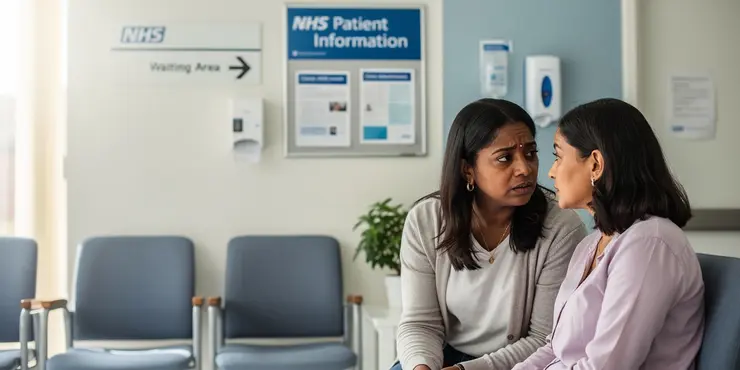

Speak To An Expert
Get clear, personalised advice for your situation.
Jot down a few questions to make the most of your conversation.
Can fibroids cause heavy menstrual bleeding?
Yes, fibroids can cause heavy menstrual bleeding. Fibroids are non-cancerous growths that develop in or around the womb, and they can affect how your period flows.
Some people with fibroids have no symptoms at all, but others notice periods that are much heavier than usual, last longer, or become more painful. Bleeding between periods can also happen.
Why fibroids can make periods heavier
Fibroids can change the shape of the womb or increase the surface area of the lining that sheds during a period. This can lead to heavier and more prolonged bleeding.
If a fibroid is close to the lining of the womb, it is more likely to affect menstrual bleeding. Larger fibroids can also press on surrounding organs and contribute to discomfort and pressure.
Other signs to look out for
Heavy menstrual bleeding is often described as soaking through pads or tampons quickly, passing large blood clots, or needing to change protection during the night. You may also feel tired or short of breath if the bleeding leads to anaemia.
Fibroids may also cause pelvic pain, a feeling of fullness in the lower tummy, or needing to urinate more often. Some people notice pain during sex or constipation as well.
When to speak to a GP
If your periods are affecting your daily life, it is a good idea to speak to a GP. Heavy bleeding is not something you need to just put up with.
You should seek medical advice sooner if you are soaking through pads or tampons very quickly, feeling dizzy or faint, or passing bleeding that seems unusually severe. These symptoms should be checked properly.
How fibroids are diagnosed and treated
A GP may ask about your symptoms and examine your tummy or pelvis. They may arrange a scan, usually an ultrasound, to look for fibroids and check their size and position.
Treatment depends on your symptoms, the size of the fibroids, and whether you want to have children in the future. Options may include medicines to reduce bleeding, hormonal treatments, or procedures to remove or shrink fibroids.
Getting help and support
Heavy periods can affect work, sleep, relationships, and mental wellbeing. If fibroids are the cause, there are treatments that can help reduce bleeding and improve quality of life.
If you are worried about your periods, start by booking an appointment with your GP. In the UK, they can assess your symptoms and refer you for further tests or treatment if needed.
Frequently Asked Questions
Yes. Uterine fibroids are a common cause of heavy menstrual bleeding, especially if they grow into or press on the uterine lining.
Fibroids can increase the surface area of the uterus, interfere with normal uterine contractions, and affect the lining, which can lead to heavier bleeding.
No. Some fibroids cause no symptoms, while others, especially submucosal fibroids, are more likely to cause heavy menstrual bleeding.
Submucosal fibroids are most often linked to heavy bleeding because they grow toward or into the uterine cavity.
Yes. Fibroids can sometimes cause spotting or bleeding between periods, not just heavier periods.
Common clues include heavy or prolonged periods, pelvic pressure, frequent urination, and known fibroids on imaging, but a clinician should evaluate the cause.
Yes. Ongoing heavy menstrual bleeding from fibroids can lead to iron-deficiency anemia, causing fatigue, weakness, and shortness of breath.
Not always. Treatment depends on symptom severity, size and location of the fibroids, your age, and whether you want to preserve fertility.
Doctors may use a pelvic exam, ultrasound, sonohysterogram, MRI, and sometimes blood tests to assess bleeding and anemia.
Yes. Fibroids can cause both heavier and longer-lasting menstrual bleeding.
It can be. Heavy bleeding may cause anemia and significantly affect quality of life, so it should be evaluated and treated when needed.
Yes, though the pattern varies. Some people have gradually worsening heavy periods, while others experience more sudden increases in bleeding.
Often yes. Fibroids commonly shrink after menopause because hormone levels drop, and bleeding usually decreases as periods stop.
Yes, some hormonal treatments can reduce bleeding, though they may not remove the fibroids themselves.
Yes. Procedures such as myomectomy, uterine artery embolization, or hysterectomy can reduce or eliminate bleeding depending on the treatment chosen.
No. Heavy bleeding can also be caused by hormonal issues, polyps, adenomyosis, bleeding disorders, and other conditions.
You should seek medical care if you soak through pads or tampons quickly, pass large clots, have bleeding between periods, or feel symptoms of anemia.
Yes. Fibroids can cause pelvic pain, cramping, pressure, or back pain in addition to heavy menstrual bleeding.
Yes. Depending on their size and location, fibroids can affect fertility and pregnancy, and they can also contribute to heavy bleeding.
No. Fibroids are a common cause, but only a medical evaluation can determine the reason for heavy bleeding.

Ergsy Search Results
This website offers general information and is not a substitute for professional advice.
Always seek guidance from qualified professionals.
If you have any medical concerns or need urgent help, contact a healthcare professional or emergency services immediately.
Some of this content was generated with AI assistance. We've done our best to keep it accurate, helpful, and human-friendly.
- Ergsy carefully checks the information in the videos we provide here.
- Videos shown by Youtube after a video has completed, have NOT been reviewed by ERGSY.
- To view, click the arrow in centre of video.
- Most of the videos you find here will have subtitles and/or closed captions available.
- You may need to turn these on, and choose your preferred language.
- Go to the video you'd like to watch.
- If closed captions (CC) are available, settings will be visible on the bottom right of the video player.
- To turn on Captions, click settings.
- To turn off Captions, click settings again.