
Get Answers
Introduction to Defibrillators
Defibrillators are life-saving devices used to deliver a controlled electric shock to the heart in cases of sudden cardiac arrest. They are commonly used in emergency situations to restore a regular heart rhythm. While defibrillators are well-known for their use on adults, many people wonder whether they can also be effectively used on children.
Types of Defibrillators
There are two main types of defibrillators: automated external defibrillators (AEDs) and manual defibrillators. AEDs are often found in public spaces and are designed to be used by the general public with minimal training. They provide step-by-step vocal instructions and can assess whether a shock is needed. Manual defibrillators, however, are typically used by healthcare professionals who can interpret the heart rhythm and determine the appropriate action.
Use of AEDs on Children
AEDs can be used on children, but there are important considerations and adaptations required. Children over the age of eight or who weigh more than 25 kilograms can be treated with a standard AED. For younger children and infants, it is crucial to use a defibrillator that has a pediatric mode or pediatric pads. These are designed to deliver a lower energy shock, suitable for smaller bodies and developing hearts.
Pediatric Mode and Pads
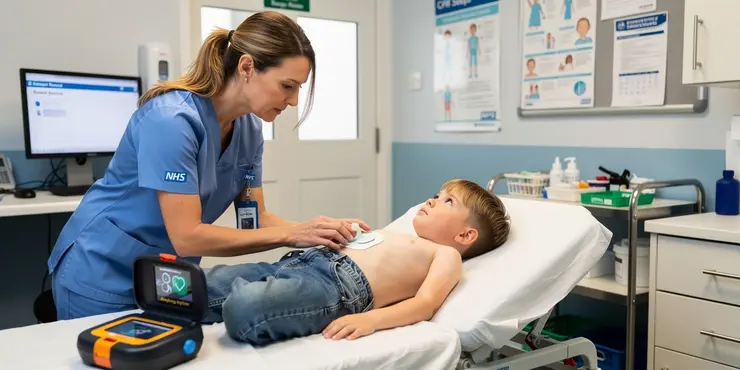
Many modern AEDs include a pediatric mode, which automatically adjusts the energy level of the shock for use on children. Additionally, pediatric pads, which are smaller and typically feature a diagram for correct placement, help ensure the device works effectively on young patients. When using pediatric pads, one pad is usually placed on the child’s chest, and the other on their back, creating a sandwich effect across the heart.
Importance of Early Intervention
Sudden cardiac arrest can occur in children for various reasons, including congenital heart defects or trauma. Immediate use of a defibrillator can be critical in increasing survival chances. Studies indicate that with every minute defibrillation is delayed, the chance of survival decreases by about 10%. Therefore, having access to an AED with pediatric capabilities is vital in both schools and public places frequently visited by children.
Training and Awareness
Although AEDs are designed for ease of use, having basic training can greatly enhance confidence and effectiveness in an emergency. Familiarising teachers, parents, and even older children with AED use can improve outcomes in cases of cardiac emergencies involving children. UK organisations, such as the Resuscitation Council UK, offer resources and training programs that cover the use of defibrillators on children.
Conclusion
In conclusion, defibrillators can indeed be used on children with the appropriate modifications and precautions. Having access to devices with pediatric capabilities and ensuring adequate training can help protect young lives in the UK. This knowledge can empower caregivers and bystanders to act swiftly and effectively in emergency situations involving children.
Introduction to Defibrillators
Defibrillators are machines that can save lives. They give an electric shock to the heart when someone has a sudden heart problem. This helps the heart beat normally again. Defibrillators are mostly used on grown-ups, but people often ask if they can be used on children too.
Types of Defibrillators
There are two kinds of defibrillators. The first kind is called automated external defibrillators or AEDs. AEDs are found in many places like schools and shopping centers. They are easy to use and talk to you, telling you what to do. The second kind is manual defibrillators. These are used by doctors and nurses because they need to know how to read the heart's signals.
Use of AEDs on Children
AEDs can be used on children but need special settings. If a child is over eight years old or weighs more than 25 kilos, you can use a regular AED. For younger or smaller children, it's important to use a defibrillator with a setting for kids or special pads made for kids. These give a smaller shock, which is safer for children.
Pediatric Mode and Pads
Some new AEDs have a special setting for kids, which changes the shock to be safer for them. They also have smaller pads for children. These pads usually have a picture showing you where to put them. With kids, one pad goes on the chest, and the other goes on the back, so the heart is in between.
Importance of Early Intervention
Sometimes children have sudden heart problems because they are born with a heart difference or after an injury. Using a defibrillator quickly can help save their life. Waiting too long to use it can make it less effective. So, it’s important to have AEDs with settings for kids in schools and places where many children are.
Training and Awareness
AEDs are easy to use, but learning how to use them can help people feel more ready in an emergency. Teaching teachers, parents, and even older kids how to use AEDs can help save lives. There are groups in the UK, like the Resuscitation Council UK, that offer lessons and materials about how to use defibrillators on children.
Conclusion
To sum up, defibrillators can be used on children if you use them the right way. Machines with kid-friendly settings and training can help keep kids safe. Knowing this can help parents and helpers act quickly if a child has a heart emergency.
Frequently Asked Questions
Yes, defibrillators can be used on children. Special pediatric pads or settings are recommended for children typically between 1 and 8 years old.
Automated External Defibrillators (AEDs) can be used on infants and children from birth, using pediatric pads or settings for those under 8 years old.
Yes, pediatric pads or electrodes are designed specifically for children and are used to adjust the energy level to a safer dose.
Pediatric pads deliver a reduced energy shock suitable for smaller, developing bodies, whereas adult pads deliver a higher energy shock.
Yes, if available, use pediatric pads to ensure the delivery of an appropriate energy level. However, if they are not available, adult pads may still be used.
If pediatric pads are unavailable, use adult pads and ensure they do not touch each other by placing one on the chest and the other on the back.
Follow the instructions on the pediatric pads, usually placing one pad on the front of the chest and the other on the back.
Many AEDs can detect when pediatric pads are connected and will adjust the shock energy levels accordingly.
Energy levels should be appropriately reduced for children, which is managed automatically by the AED when pediatric pads are used.
While AEDs are designed for untrained bystanders, it is beneficial to receive CPR and AED training to enhance confidence and effectiveness during real emergencies.
A defibrillator, when used correctly, poses minimal risk and is crucial for restoring normal heart rhythms during cardiac arrest, outweighing potential harm.
Early defibrillation is critical to increase the child's chances of survival, as it helps to restore normal heart rhythm quickly.
If a child is unresponsive and not breathing, call emergency services and use the AED as instructed. Follow its voice prompts and apply CPR if needed.
Perform regular checks as per the device guidelines. AEDs perform self-diagnoses and display readiness indicators to confirm functionality.
Yes, with appropriate pediatric settings or pads. An AED should still be used if the child is unresponsive and not breathing normally.
Yes, CPR should be performed in conjunction with defibrillation to provide the best chance of survival until professional help arrives.
Most public AEDs include pediatric capabilities, either through special pads or software settings for different age groups.
Yes, regularly checking for pad expiry dates and ensuring they're in good condition as part of general AED maintenance is recommended.
Certified CPR and AED courses offered by organizations like the Red Cross or American Heart Association include training for pediatric emergencies.
Call emergency services, turn on the AED, attach pediatric pads as instructed, follow voice prompts, and provide CPR if needed.
Yes, you can use defibrillators on children. It is best to use special pads for kids or change the settings. This is usually for children who are between 1 and 8 years old.
You can use an Automated External Defibrillator (AED) on a baby or a child from the time they are born. Use special pads or settings for children who are 8 years old or younger.
Yes, special pads are made for children to use during treatment. They help make sure the energy is the right amount and safe for kids.
Kids' pads give a smaller electric shock, which is safe for children's bodies. Grown-up pads give a bigger shock.
Yes, if you have them, use special pads for kids. They give the right amount of power. If you don't have kids' pads, you can still use the grown-up pads.
If you don't have child pads, use adult pads. Put one pad on the front and one on the back so they don't touch each other.
Follow what the picture shows on the pads for kids. Usually, you put one pad on the front of the chest and the other on the back.
Lots of AEDs know when special pads for children are used. They change the shock power to make it safe for kids.
When using the AED machine on children, special pads are used. These pads help the AED machine to give just the right amount of energy for kids. The machine figures this out on its own, so it's safe to use.
AEDs are made for people to use even if they have not been trained. But, it is helpful to learn how to do CPR and AED. This can make you feel more ready and improve how well you help in real emergencies.
A defibrillator is a machine that can help if someone's heart stops beating properly. It is very safe to use and can save lives by making the heart beat normally again.
Using a defibrillator quickly is very important. It can help a child's heart beat normally again and improve their chances of getting better.
Here are some tools and techniques that can help: - Picture cards: Use cards with pictures to show how to use a defibrillator. - Simple steps: Break down the steps into easy instructions. - Videos: Watch videos that show how to use a defibrillator. - Practice: Use a practice defibrillator to get comfortable with the steps.If a child does not wake up and is not breathing, call for help right away. Use the AED machine like it says. Listen to the machine and do CPR if you need to.
Check the AEDs (Automatic External Defibrillators) often. Follow the device guide to know how. AEDs check themselves and show a sign when they are ready to use.
Yes, you can use an AED on a child. Make sure you have the right settings or pads for kids. Use the AED if the child is not moving and not breathing right.
Yes, when someone has a heart problem, you should do CPR and use a special machine called a defibrillator. This helps keep them alive until doctors can help.
Most public AEDs can help children too. They have special pads or settings for kids of different ages.
It is a good idea to look at the dates on the pads all the time. Make sure they are not too old. Check that the pads are in good shape. This helps keep the AED working well.
You can learn to help kids in emergencies by taking special classes. These classes teach you how to do CPR and use an AED machine. Places like the Red Cross or American Heart Association offer these classes.
Call for help. Turn on the AED machine. Use kid-size pads like the directions say. Listen to the machine's voice instructions. Do CPR if you need to.

Ergsy Search Results
This website offers general information and is not a substitute for professional advice.
Always seek guidance from qualified professionals.
If you have any medical concerns or need urgent help, contact a healthcare professional or emergency services immediately.
Some of this content was generated with AI assistance. We've done our best to keep it accurate, helpful, and human-friendly.
- Ergsy carefully checks the information in the videos we provide here.
- Videos shown by Youtube after a video has completed, have NOT been reviewed by ERGSY.
- To view, click the arrow in centre of video.
- Most of the videos you find here will have subtitles and/or closed captions available.
- You may need to turn these on, and choose your preferred language.
- Go to the video you'd like to watch.
- If closed captions (CC) are available, settings will be visible on the bottom right of the video player.
- To turn on Captions, click settings.
- To turn off Captions, click settings again.