
Speak To An Expert
Get clear, personalised advice for your situation.
Jot down a few questions to make the most of your conversation.
Access to School Meals for Children with Disabilities
In the United Kingdom, there is a concerted effort to ensure that all children, including those with disabilities, have access to nutritious school meals. School meals play a crucial role in child development and well-being, providing essential nutrients that support growth and learning. Ensuring children with disabilities can access these meals is an important aspect of inclusive education.
Government Policies and Support
The UK government has implemented various policies to support the inclusion of children with disabilities in mainstream education, which extends to the provision of school meals. The Equality Act 2010 mandates reasonable adjustments to be made so that children with disabilities are not at a disadvantage compared to their peers. This includes necessary accommodations in the school dining environment and meal provisions.
Adaptations and Accommodations
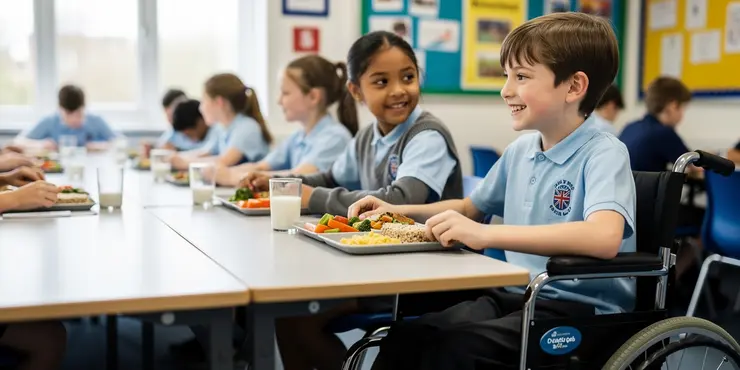
Schools are required to make adaptations to ensure children with disabilities can comfortably access meals. This may involve modifications such as alternative dining arrangements for children who use wheelchairs or require assistance. Additionally, menu options can be adapted to cater to specific dietary needs related to disabilities, such as texture-modified meals for children with swallowing difficulties.
Free School Meals and Entitlements
Many children with disabilities are also entitled to free school meals if their families meet certain financial criteria. The government ensures that these entitlements are accessible to eligible families, thereby supporting children who may be at a greater risk of food insecurity. Efforts are made to streamline the process for applying for these benefits, ensuring that families who may already be navigating complex systems for disability support can access them easily.
Challenges and Barriers
Despite the policies in place, there can still be challenges in ensuring complete access for children with disabilities. For example, some schools may face difficulties in catering to specific dietary requirements due to budget constraints or lack of resources. There is also a need to continually train school staff to understand the specific needs of children with disabilities to provide effective support during meal times.
The Role of Local Authorities and Schools
Local authorities and school governing bodies play a vital role in ensuring that policies are implemented effectively on the ground. They are responsible for identifying potential barriers to access and working collaboratively with parents, carers, and health professionals to address these issues. Schools are encouraged to foster an inclusive environment, promoting social interaction during meal times that include all students.
Conclusion
Access to school meals for children with disabilities in the UK involves a collective effort from the government, local authorities, and individual schools. While there are robust policies and frameworks in place, ongoing evaluation and adaptation are necessary to overcome challenges and improve access. By working together, all stakeholders can ensure that children with disabilities receive the nutritional support they need to thrive in their educational environment.
Access to School Meals for Children with Disabilities
In the UK, schools work hard to make sure all kids, including those with disabilities, can eat healthy school meals. These meals are important because they help kids grow and learn. It is very important that children with disabilities can eat these meals, too.
Government Policies and Support
The UK government has made rules to help kids with disabilities go to regular schools and eat school meals. The Equality Act 2010 says schools must make changes so kids with disabilities have the same chance as other kids. This means schools must make sure the dining area and food are okay for everyone.
Adaptations and Accommodations
Schools need to make changes so kids with disabilities can eat comfortably. This might mean setting up new eating areas for kids who use wheelchairs or need help. Schools may also need to change the menu for kids who need special food, like soft meals for those with trouble swallowing.
Free School Meals and Entitlements
Some kids with disabilities can get free school meals if their families don't have much money. The government makes sure these families can easily apply for free meals. This helps kids who might need more help getting food.
Challenges and Barriers
Even with these rules, there can still be problems. Some schools may find it hard to meet all food needs because of money or resources. School staff need to know how to help kids with disabilities at meal times.
The Role of Local Authorities and Schools
Local authorities and school leaders make sure rules are followed. They work with parents, carers, and health experts to solve problems. It is important for schools to make meal times fun and make sure all kids can eat together.
Conclusion
Helping children with disabilities eat school meals is a team effort in the UK. The government, local groups, and schools must work together. Even though there are good rules, we need to keep checking and improving. By doing this, we make sure all kids get the healthy food they need to do their best at school.
Frequently Asked Questions
Yes, children with disabilities are eligible for school meals, just like other students.
Yes, schools are required to provide reasonable accommodations for special dietary needs due to disabilities.
You can apply for free or reduced-price meals through your school's meal program application process.
Contact the school food service manager and discuss your child's specific needs. Schools are required to accommodate special dietary needs.
Yes, schools must adhere to federal and state laws, like the ADA, that require equal access to nutritional programs for children with disabilities.
Yes, parents can provide meals from home if the school cannot adequately meet their child's dietary requirements.
Often, a doctor’s note may be required to verify the need for special dietary modifications.
You should provide written documentation and communicate directly with the school nutrition staff to inform them of any restrictions.
The USDA and other organizations offer guidelines and resources to help schools create inclusive meal programs.
The school district's nutrition services department is typically responsible for compliance with dietary accommodations.
Reach out to the school administration and, if necessary, contact your school district's office for support.
Yes, organizations like the School Nutrition Association and local disability advocacy groups can offer assistance.
Schools may develop individualized meal plans in collaboration with parents and healthcare providers for children with specific needs.
Yes, many schools offer training for staff to understand and manage food allergies and accommodate disabilities effectively.
Yes, the Rehabilitation Act of 1973 and the Americans with Disabilities Act protect these rights.
Yes, if the school participates in federal meal programs, it must provide meals to all students, including those with disabilities.
Ensure that you have provided the necessary documentation from a healthcare provider to the school.
Schools typically cannot charge extra for providing reasonable accommodations for special dietary needs due to disabilities.
A doctor's note should specify the child's disability, the dietary restriction, and recommended meal modifications.
While not specific to disabilities, federal school meal programs aim to be inclusive and accessible to all children, including those with disabilities.
Yes, kids with disabilities can get school meals too, just like other students.
Yes, schools must help with special diets if a student has a disability.
You can ask for free or cheaper meals at school. Use the school’s meal form to do this.
Talk to the person in charge of school meals. Tell them what your child needs to eat. Schools have to help with special food needs.
Yes, schools must follow important rules made by the country and the state. These rules, like the ADA, make sure all kids, including those with disabilities, can get healthy food at school.
Yes, parents can send food from home if the school can't meet what their child needs to eat.
Sometimes, you need a note from the doctor to show you need special food changes.
Write a note and talk to the school lunch staff about any foods your child cannot eat. This way, they will know what your child needs.
The USDA and other groups have rules and help for schools to make meal programs that include everyone.
The people who help with school lunches make sure the food is right for everyone to eat.
Talk to the people in charge at your school. If you need more help, you can call the school district office.
Yes, groups like the School Nutrition Association and local disability support groups can help you.
Schools can work with parents and doctors to make special meal plans for children who need them.
Yes, many schools help their staff learn how to handle food allergies and support children with disabilities.
Yes, there are laws that help protect your rights. These laws are called the Rehabilitation Act of 1973 and the Americans with Disabilities Act.
Yes, if the school gives food through a special program, it must give meals to all students, even those with disabilities.
Make sure you give the school the important papers from your doctor or healthcare worker.
Schools usually cannot ask for more money when they help kids who need special food because of their disabilities.
A doctor's note should say what the child's disability is. It should also say what foods the child cannot eat and how their meals should be changed.
School meal programs are for all kids. This includes kids with disabilities. These programs want to help everyone.

Ergsy Search Results
This website offers general information and is not a substitute for professional advice.
Always seek guidance from qualified professionals.
If you have any medical concerns or need urgent help, contact a healthcare professional or emergency services immediately.
Some of this content was generated with AI assistance. We've done our best to keep it accurate, helpful, and human-friendly.
- Ergsy carefully checks the information in the videos we provide here.
- Videos shown by Youtube after a video has completed, have NOT been reviewed by ERGSY.
- To view, click the arrow in centre of video.
- Most of the videos you find here will have subtitles and/or closed captions available.
- You may need to turn these on, and choose your preferred language.
- Go to the video you'd like to watch.
- If closed captions (CC) are available, settings will be visible on the bottom right of the video player.
- To turn on Captions, click settings.
- To turn off Captions, click settings again.