
Speak To An Expert
Get clear, personalised advice for your situation.
Jot down a few questions to make the most of your conversation.
Cultural Perception of Breastfeeding in Public
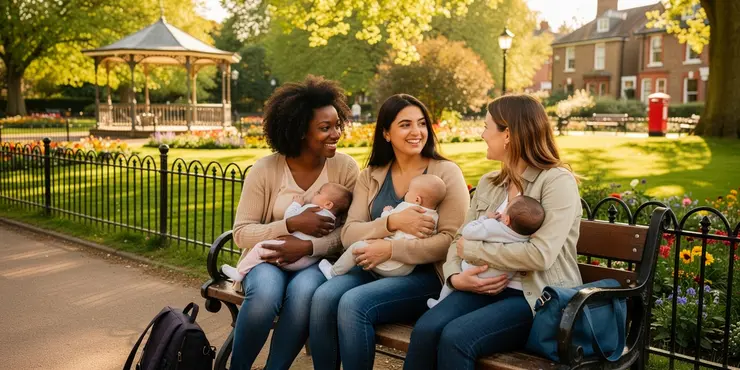
In the UK, breastfeeding in public has been a topic of discussion for many years. While it is legally protected and supported by health organizations, cultural acceptance varies. Some people view it as a natural and important practice, recognizing the benefits of breastfeeding for both mother and child.
However, others may feel uncomfortable witnessing breastfeeding in public spaces. This discomfort can stem from cultural norms or personal beliefs about modesty and exposure. Despite these varying perceptions, there is a general trend towards greater acceptance and understanding.
Legal Rights and Protections
In the UK, mothers have the legal right to breastfeed in public. The Equality Act 2010 protects women from being discriminated against for breastfeeding. Businesses and services cannot ask a breastfeeding mother to leave a space, as this would be considered discriminatory.
These legal protections aim to create an environment where breastfeeding is normalized. By safeguarding a mother’s right to feed her child, the law encourages public acceptance of breastfeeding. Knowing their rights can empower mothers to breastfeed when and where they choose.
Public Opinion and Social Attitudes
Public opinion on breastfeeding in public is evolving. Many people now support the act, recognizing its importance for infant health. Campaigns and initiatives have helped to normalize breastfeeding and educate the public about its benefits.
Despite significant support, some controversy remains. Certain individuals and communities hold conservative views, preferring discretion or covering up while breastfeeding. By fostering dialogue and understanding, society can continue to shift towards acceptance.
Media Representation and Advocacy
The media plays a critical role in shaping public perception of breastfeeding. Positive representations in advertisements, television, and social media help destigmatize the practice. Many public figures and influencers use their platforms to advocate for breastfeeding, bringing visibility to the issue.
Advocacy organizations also work to support breastfeeding mothers. They provide resources and support, while also campaigning for cultural acceptance. Through education and representation, these efforts work towards making breastfeeding in public a normalized, acceptable act.
The Role of Public Spaces and Facilities
Increasingly, businesses and public spaces are providing facilities for breastfeeding mothers. Baby-friendly cafes, designated feeding areas, and nursing rooms offer supportive environments. These spaces affirm a mother’s right to breastfeed comfortably in public.
However, challenges remain in ensuring all public spaces are inclusive. Continued advocacy and awareness are necessary to ensure every mother feels supported and welcome. By promoting breastfeeding-friendly environments, society can encourage acceptance and support for mothers.
Cultural Perception of Breastfeeding in Public
In the UK, people talk a lot about breastfeeding in public. It is allowed by law and supported by doctors, but not everyone accepts it. Some people think breastfeeding in public is normal and good for moms and babies.
But other people might feel uneasy when they see it. This can be because of what they believe about staying covered up. Even with different opinions, more people are starting to accept it.
Legal Rights and Protections
Moms can breastfeed in public places in the UK. The law makes sure they are not treated unfairly just for breastfeeding. Businesses cannot tell a mom to leave because she is feeding her baby.
The law wants people to see breastfeeding as normal. It helps moms know they can feed their babies wherever they need to. This knowledge is important to make moms feel confident.
Public Opinion and Social Attitudes
People’s views on breastfeeding in public are changing. More people understand it is good for babies. Some campaigns have helped people see that breastfeeding is normal and healthy.
Still, some people do not fully agree. They think moms should cover up when feeding their babies. Talking openly about it will help more people accept it in the future.
Media Representation and Advocacy
TV, ads, and social media show breastfeeding in a positive light. This helps people see it as normal. Famous people talk about breastfeeding to help others accept it.
Groups also help by supporting breastfeeding mothers. They give help and teach people about breastfeeding. These actions make breastfeeding in public more accepted.
The Role of Public Spaces and Facilities
More businesses are making spaces for moms to breastfeed, like baby-friendly cafes and feeding areas. These places help moms feel comfortable feeding their babies in public.
There are still places where it’s hard for moms to breastfeed. We need to keep working on making all places welcoming. By making more friendly spaces, society helps moms and their babies.
Frequently Asked Questions
Cultural perceptions of breastfeeding in public vary widely across different regions and communities. In some cultures, it is widely accepted and considered normal, while in others, it may still be stigmatized.
Many countries have laws in place that protect a woman's right to breastfeed in public. However, the specifics can vary, and it's important to be informed about local regulations.
Countries like Norway, Sweden, and Canada are known for being supportive of public breastfeeding, with strong legal protections and societal acceptance.
Yes, in some countries and cultures, breastfeeding in public may be discouraged due to modesty norms or social stigma.
Acceptance can vary greatly within countries, often differing between urban and rural areas, and is influenced by cultural, religious, and social factors.
Yes, perceptions have been shifting in many parts of the world towards greater acceptance, driven by public health campaigns and advocacy.
Common misconceptions include the belief that breastfeeding in public is indecent or that it should be done discreetly, although many advocate that breastfeeding is natural and should not be hidden.
Social media and public campaigns have played significant roles in normalizing breastfeeding in public, providing platforms for advocacy and sharing positive messaging.
Yes, religious beliefs can influence how breastfeeding in public is viewed, with different religious and cultural interpretations affecting acceptance levels.
Breastfeeding mothers can have varied feelings, ranging from comfortable and empowered to anxious or fearful of judgment or harassment.
Common challenges include facing negative remarks, lack of comfortable spaces, and feeling uneasy due to societal attitudes.
Communities can support breastfeeding by normalizing it through education, providing nursing-friendly spaces, and fostering inclusive attitudes.
Cultural norms greatly impact breastfeeding practices, influencing how, when, and where women feel comfortable breastfeeding their children.
Yes, events like World Breastfeeding Week and initiatives like 'Normalize Breastfeeding' raise awareness and support breastfeeding in public.
In many cases, laws protecting the right to breastfeed in public apply to all public spaces, including restaurants, shops, and parks, but it's important to check local legislation.
Strategies include using nursing covers, wearing appropriate clothing, and seeking out private areas when needed, though many advocate for breastfeeding without restrictions.
Public opinions can vary, with younger generations and women often showing more support for breastfeeding in public than older generations and men, though this is not universally true.
Public breastfeeding supports infant health by facilitating frequent feeding, contributing to optimal nutrition, and strengthening the mother-child bond.
Workplaces can support by providing designated lactation areas, allowing flexible break times, and promoting a culture that respects breastfeeding mothers.
While negative comments and backlash do occur, there is increasing public support and advocacy to counteract negativity and promote acceptance.
How people feel about breastfeeding in public can be very different in each place and group. In some places, people think it is normal and okay. In other places, people might not like it as much.
Many places have rules that let moms breastfeed in public. But these rules can be different, so it's good to know what the rules are where you live.
In some countries, like Norway, Sweden, and Canada, it is okay for moms to breastfeed their babies in public. There are good laws and people think it's okay.
In some places, people might not like it when moms feed their babies breast milk in public. This might be because of their rules about being private, or because some people think it is not okay.
People in different places can think differently about things. In big cities and small towns, people might have different ideas. What people believe can be changed by their culture, religion, and the people around them.
To help understand more, you can use picture books or story tools. Talking with someone who knows can also help.
Yes, many people around the world are becoming more accepting. This is because of health campaigns and people speaking out.
Some people think breastfeeding in public is not okay and should be hidden. But lots of people say breastfeeding is normal and does not need to be hidden.
Social media and public campaigns have helped make breastfeeding in public more accepted. They give people a place to talk about it and share good messages.
Yes, what people believe in their religion can change how they feel about moms breastfeeding their babies in public. Different religions and cultures may have their own ideas about if it is okay or not.
If reading is hard, tools like audiobooks or text-to-speech apps can help. Listening to the words can make it easier to understand.
Moms who breastfeed can feel different ways. Some feel happy and strong. Others might feel worried or scared about what others might think or say.
Common challenges are:
- Hearing mean comments.
- Not having places to feel comfortable.
- Feeling worried because of what other people think.
Communities can help moms breastfeed. They can do this by teaching people that breastfeeding is normal, creating safe places for moms to nurse their babies, and being kind and supportive to everyone.
What people in a place think is normal can change how moms breastfeed their babies. This can affect how, when, and where moms feel okay about breastfeeding.
Yes, special events like World Breastfeeding Week and projects like 'Normalize Breastfeeding' help people understand and support breastfeeding in public places.
In most places, there are rules that say moms can breastfeed their babies anywhere in public. This means they can do it in places like restaurants, shops, and parks. But it's a good idea to check the rules in your area to be sure.
There are ways to feel more comfortable when breastfeeding in public. You can use special covers, wear the right clothes, or find a private place if you want. Some people say it’s okay to feed your baby anywhere, anytime.
People have different thoughts about breastfeeding in public. Young people and women often think it's okay. Older people and men might not agree as much, but this isn't always the case for everyone.
Breastfeeding in public is good for babies. It helps them eat often, gives them the best food, and helps moms and babies feel close.
Workplaces can help by giving mothers a special place to breastfeed or pump milk, letting them take breaks when they need to, and being kind and respectful to breastfeeding mothers.
Sometimes, people say mean things and there is a strong comeback from others. But more and more people are standing up to support and spread kindness.

Ergsy Search Results
This website offers general information and is not a substitute for professional advice.
Always seek guidance from qualified professionals.
If you have any medical concerns or need urgent help, contact a healthcare professional or emergency services immediately.
Some of this content was generated with AI assistance. We've done our best to keep it accurate, helpful, and human-friendly.
- Ergsy carefully checks the information in the videos we provide here.
- Videos shown by Youtube after a video has completed, have NOT been reviewed by ERGSY.
- To view, click the arrow in centre of video.
- Most of the videos you find here will have subtitles and/or closed captions available.
- You may need to turn these on, and choose your preferred language.
- Go to the video you'd like to watch.
- If closed captions (CC) are available, settings will be visible on the bottom right of the video player.
- To turn on Captions, click settings.
- To turn off Captions, click settings again.