
Speak To An Expert
Get clear, personalised advice for your situation.
Jot down a few questions to make the most of your conversation.
Introduction to Travel Pillows for Infants
Traveling with infants can be a challenging experience, especially when it comes to ensuring their comfort and safety. One commonly used accessory is the travel pillow, designed to support an infant's head and neck during journeys. However, a significant concern for parents is whether these travel pillows are safe to use, particularly on long trips by car or plane.
Understanding Infant Travel Pillow Safety
The safety of infant travel pillows depends on various factors including the design, material, and how they are used during travel. While these pillows can provide beneficial support, improper usage and certain designs may pose safety risks. It is crucial to choose a product that meets safety standards and to use it correctly to avoid potential hazards.
Potential Risks of Using Travel Pillows for Infants
One of the main risks associated with infant travel pillows is the potential for suffocation or airway obstruction. Pillows that are too bulky or poorly designed can push the infant’s head forward, leading to restricted breathing. Additionally, during car travel, objects like pillows, if not securely fastened, can become projectiles in the event of sudden stops or accidents.
Criteria for Choosing Safe Travel Pillows
To ensure the safety of a travel pillow for infants, parents should look for products that are labelled as conforming to safety standards such as CE marked or approved by recognized safety organisations. The pillow should be firm enough to provide support yet soft to ensure comfort. Ideally, the design should cradle the baby’s head without pushing it forward.
Guidelines for Safe Usage
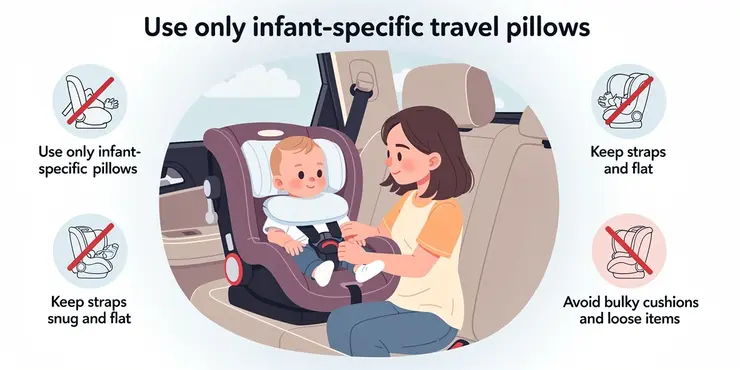
When using a travel pillow for infants, it is important to follow manufacturer instructions and guidelines. Travel pillows should never replace the proper use of child safety seats in vehicles. Parents should regularly check that the pillow is properly positioned and that the child’s chin is not forced down towards their chest. For younger infants, especially those under four months, it might be best to avoid using travel pillows unless specifically designed for their age group.
Alternatives to Traditional Travel Pillows
For parents concerned about the safety of travel pillows, there are alternative options such as properly padded and reclining child car seats or baby carriers with built-in head and neck support. These solutions may provide better protection and comfort for infants without the risks associated with loose travel pillows.
Conclusion
While travel pillows can offer additional comfort for infants during travel, their safety largely depends on their design, material, and correct usage. Parents should be vigilant in ensuring any travel accessory used is safe and appropriate for their child’s age and size. By choosing well-designed products and adhering to safety guidelines, the risks associated with infant travel pillows can be significantly minimised.
Introduction to Travel Pillows for Infants
Traveling with babies can be hard. Keeping them comfortable and safe is very important. A travel pillow is one thing parents can use. It helps support a baby’s head and neck when traveling. Parents worry if travel pillows are safe, especially on long car rides or plane trips.
Understanding Infant Travel Pillow Safety
Travel pillow safety depends on how they are made and used. They can help but can also be risky if not used right. It is important to pick a pillow that is safe and use it correctly to keep babies safe.
Potential Risks of Using Travel Pillows for Infants
Travel pillows can be dangerous if they cause suffocation or block breathing. Big or badly shaped pillows can push the baby's head forward, making it hard to breathe. In the car, loose pillows can move around quickly if there is a sudden stop or crash.
Criteria for Choosing Safe Travel Pillows
For safety, look for travel pillows that have safety labels like CE marked. The pillow should be firm to support the head but soft enough to be comfortable. It should hold the baby's head safely without pushing it forward.
Guidelines for Safe Usage
Always follow the instructions that come with the travel pillow. Pillows should not replace child safety seats in the car. Make sure the pillow is in the right position and that the baby’s chin is not pushed down. For very young babies under four months, it might be best not to use pillows unless they are made for that age.
Alternatives to Traditional Travel Pillows
If travel pillows are not safe enough, parents can consider other options like special car seats with padding or baby carriers with head and neck support. These might be safer and more comfortable for babies than loose pillows.
Conclusion
Travel pillows can make trips more comfortable for babies. But safety depends on how they are made and used. Parents should always make sure any travel item is safe and fits the baby's age and size. By picking good products and following safety tips, parents can keep their babies safe while traveling.
Frequently Asked Questions
Travel pillows for infants can be safe when used correctly under proper supervision, but it's essential to choose the right type and use them appropriately.
It's generally recommended to wait until the infant can hold their head up independently, usually around 6-8 months of age.
Choose a travel pillow with appropriate neck support, hypoallergenic materials, and ensure it's the right size for your infant.
Yes, some travel pillows are specifically designed for infants, taking into account their size and need for gentle support.
Always supervise your child when using a travel pillow and ensure it does not obstruct breathing or cause discomfort.
While some claim to help, travel pillows are not a replacement for proper medical advice and care in treating or preventing flat head syndrome.
It's not recommended for infants to sleep unattended with a travel pillow due to the risk of suffocation and Sudden Infant Death Syndrome (SIDS).
Inflatable pillows are generally not recommended for infants due to the risk of suffocation and sudden deflation issues.
Regularly inspect for any damage or wear, ensuring it maintains its shape and support. Replace if necessary.
No, adult travel pillows are not suitable for infants due to size and lack of appropriate support.
Materials that are hypoallergenic, breathable, and soft, such as cotton and memory foam, are ideal for infant travel pillows.
Incorrect use can lead to restricted breathing, discomfort, and an increased risk of SIDS or suffocation.
Position it to support the neck without covering the face, ensuring their head remains naturally aligned.
Travel pillows can provide support but should not replace proper car seat restraints or adult supervision.
Look for travel pillows that meet safety certifications from organizations like the Consumer Product Safety Commission (CPSC).
Opinions may vary; it's best to consult with a pediatrician for personalized advice based on your infant's needs.
Only if the pillow does not interfere with the car seat's safety harness and fits well around the baby's neck without restricting airways.
Yes, neck supports specifically designed for infant car seats or baby carriers can be good alternatives.
While they provide support, they should not be relied upon for neck muscle development, which comes from supervised tummy time and natural movement.
You can purchase them in baby specialty stores, online marketplaces, and from retailers with a good reputation for safety and quality.
Travel pillows for babies can be safe if used the right way. A grown-up should always watch the baby. Make sure to pick the right kind of pillow and use it properly.
It’s best to wait until the baby can hold their head up by themselves. This usually happens when the baby is 6 to 8 months old.
Pick a comfy travel pillow that helps your baby's neck. Make sure it's made from materials that won’t cause allergies. Check that the pillow is the right size for your baby.
Yes, there are special travel pillows made for babies. These pillows are just the right size and are soft to keep the baby comfortable.
Watch your child when they use a travel pillow. Make sure the pillow does not make it hard for them to breathe or feel uncomfortable.
Travel pillows might help a little, but they can't replace a doctor's advice or care for fixing or stopping flat head problems.
Babies should not sleep alone with a travel pillow. This is because it might make it hard for them to breathe and could cause something called SIDS, which is very dangerous.
Inflatable pillows are not safe for babies. They can stop a baby from breathing or might quickly lose air.
Check it often to see if it is broken or worn out. Make sure it keeps its shape and support. Get a new one if you need to.
No, grown-up travel pillows are not good for babies. They are too big and do not give the right support.
Good materials for baby travel pillows are cotton and memory foam. These are soft, let air go through, and don't cause allergies.
Using something the wrong way can make it hard to breathe, feel uncomfortable, and make the baby unsafe when sleeping.
Make sure the pillow supports the neck but does not cover the face. Keep the head straight and comfortable.
Travel pillows can help make you comfortable. But remember, they are not as safe as a proper car seat or having an adult with you. Always use a car seat or stay with an adult when traveling in a car.
Find travel pillows that are safe. Look for ones with safety labels from groups like the Consumer Product Safety Commission (CPSC). This means the pillows have been checked and are safe to use.
People might think different things. It is a good idea to talk to a doctor who knows about children. They can give you advice just for your baby.
Use a pillow if it doesn't get in the way of the car seat's safety straps. The pillow should fit around the baby's neck without blocking their breathing.
Yes, neck supports made just for baby car seats or carriers can be a good choice.
Neck pillows can help, but they won't make your neck muscles strong. To make neck muscles strong, do tummy time on the floor with someone watching you and move around naturally.
You can buy them at stores that sell things for babies.
You can also find them on the internet.
Make sure to buy from stores that are known to be safe and have good quality.

Ergsy Search Results
This website offers general information and is not a substitute for professional advice.
Always seek guidance from qualified professionals.
If you have any medical concerns or need urgent help, contact a healthcare professional or emergency services immediately.
Some of this content was generated with AI assistance. We've done our best to keep it accurate, helpful, and human-friendly.
- Ergsy carefully checks the information in the videos we provide here.
- Videos shown by Youtube after a video has completed, have NOT been reviewed by ERGSY.
- To view, click the arrow in centre of video.
- Most of the videos you find here will have subtitles and/or closed captions available.
- You may need to turn these on, and choose your preferred language.
- Go to the video you'd like to watch.
- If closed captions (CC) are available, settings will be visible on the bottom right of the video player.
- To turn on Captions, click settings.
- To turn off Captions, click settings again.