
Get Answers
Yes, the National Trust does offer volunteer opportunities
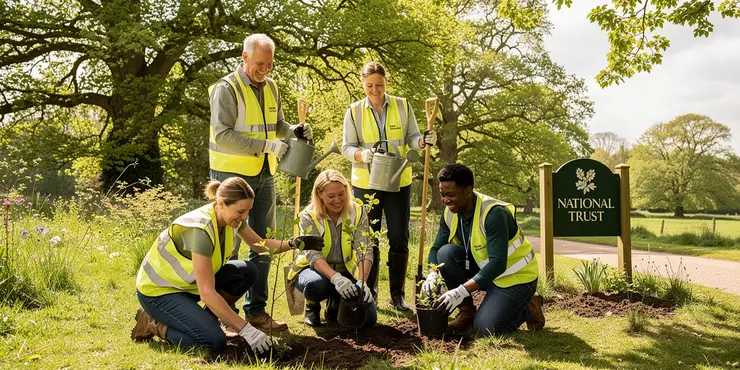
The National Trust relies on thousands of volunteers across England, Wales and Northern Ireland. If you enjoy heritage, nature, gardens or welcoming visitors, there are many ways to get involved. Volunteer roles help keep historic places open and cared for.
Opportunities are available in a wide range of settings. You might help at a stately home, work in a garden, support conservation work, or assist at an event. There are also roles in offices, retail areas and visitor services.
What kinds of volunteering are available?
The types of roles vary depending on the property or site. Some volunteers lead tours, share local history, or answer questions from visitors. Others help with practical tasks such as gardening, litter picking, habitat management or fundraising.
There are often specialist roles too. For example, you may be able to join a walking group, support a bookshop, help in a café, or assist with learning activities for children. Some opportunities are seasonal, while others run throughout the year.
Who can volunteer?
Most National Trust volunteer roles are open to adults, and many welcome people of different ages, backgrounds and experience levels. You do not usually need previous experience. The National Trust often provides training and support before you start.
Volunteering can suit people who want to give a few hours each week, as well as those who can help less often. It can also be a good option for retirees, students, jobseekers and anyone wanting to meet people or learn new skills.
What are the benefits?
Volunteering with the National Trust can be rewarding in many ways. You can meet like-minded people, spend time outdoors, and learn more about history, wildlife and conservation. Many volunteers also enjoy being part of a team and making a visible difference.
It can also help build confidence and experience. Some people volunteer to support a future career in heritage, tourism, education or conservation. Others simply enjoy the chance to contribute to places they care about.
How do you apply?
You can search for volunteer opportunities on the National Trust website. Listings usually explain the role, location, time commitment and any skills needed. From there, you can contact the local team or complete an online application.
If you are unsure what suits you, it is worth getting in touch anyway. Local teams can often talk through the options and help match you to a role. Because opportunities vary by area, it is a good idea to check regularly for new openings.
Frequently Asked Questions
National Trust volunteer opportunities are unpaid roles that help support the care, conservation, visitor experience, and day-to-day running of National Trust places and projects.
Eligibility for National Trust volunteer opportunities is generally open to anyone who is willing to give their time, though some roles may require specific skills, age limits, checks, or physical abilities.
You can usually apply for National Trust volunteer opportunities by browsing available roles, selecting one that suits your interests and availability, and completing the online or local application process.
National Trust volunteer opportunities can include welcoming visitors, guiding tours, helping in gardens, supporting conservation work, assisting in shops or cafés, and administrative or behind-the-scenes tasks.
Many National Trust volunteer opportunities do not require previous experience because training is often provided, but some specialist roles may prefer relevant skills or background knowledge.
Yes, many National Trust volunteer opportunities offer flexible schedules, with options for weekly, monthly, seasonal, or occasional volunteering depending on the role and location.
Yes, students can often take part in National Trust volunteer opportunities if they meet any age or availability requirements set for the specific role.
Yes, National Trust volunteer opportunities are often well suited to retirees because many roles offer flexible hours, social contact, and the chance to use existing skills or learn new ones.
Yes, many National Trust volunteer opportunities include induction and role-specific training so volunteers can feel confident and safe while carrying out their tasks.
Some National Trust volunteer opportunities may offer reimbursement for agreed travel or out-of-pocket expenses, but policies can vary by role and location.
Useful skills for National Trust volunteer opportunities can include customer service, teamwork, communication, practical skills, enthusiasm for heritage or nature, and a willingness to learn.
Many National Trust volunteer opportunities are available year-round, although some roles are seasonal and may be more active during holidays, weekends, or special events.
Some National Trust volunteer opportunities may be suitable for family participation, but each role has its own rules about age, supervision, and the kinds of tasks involved.
Yes, many National Trust volunteer opportunities involve outdoor work such as gardening, habitat management, path maintenance, or helping visitors at outdoor sites.
Many National Trust volunteer opportunities aim to be accessible and inclusive, and some sites can adapt roles or tasks, but accessibility depends on the specific location and volunteer activity.
The time commitment for National Trust volunteer opportunities varies widely, from a few hours a month to regular weekly shifts, depending on the role and the volunteer’s availability.
In many cases, volunteers can take part in more than one National Trust volunteer opportunity if the roles and schedules are compatible and the local team agrees.
Benefits of National Trust volunteer opportunities often include skill development, social connection, access to unique places, training, and the satisfaction of supporting conservation and heritage.
You can find local National Trust volunteer opportunities by checking the National Trust website, contacting nearby properties, or asking local volunteer coordinators about current openings.
National Trust volunteer opportunities can help build skills, experience, and references that may be useful when applying for paid jobs, but volunteering does not guarantee employment.

Ergsy Search Results
This website offers general information and is not a substitute for professional advice.
Always seek guidance from qualified professionals.
If you have any medical concerns or need urgent help, contact a healthcare professional or emergency services immediately.
Some of this content was generated with AI assistance. We've done our best to keep it accurate, helpful, and human-friendly.
- Ergsy carefully checks the information in the videos we provide here.
- Videos shown by Youtube after a video has completed, have NOT been reviewed by ERGSY.
- To view, click the arrow in centre of video.
- Most of the videos you find here will have subtitles and/or closed captions available.
- You may need to turn these on, and choose your preferred language.
- Go to the video you'd like to watch.
- If closed captions (CC) are available, settings will be visible on the bottom right of the video player.
- To turn on Captions, click settings.
- To turn off Captions, click settings again.