
Get Answers
Overview of Support Groups for Testicular Cancer in the UK
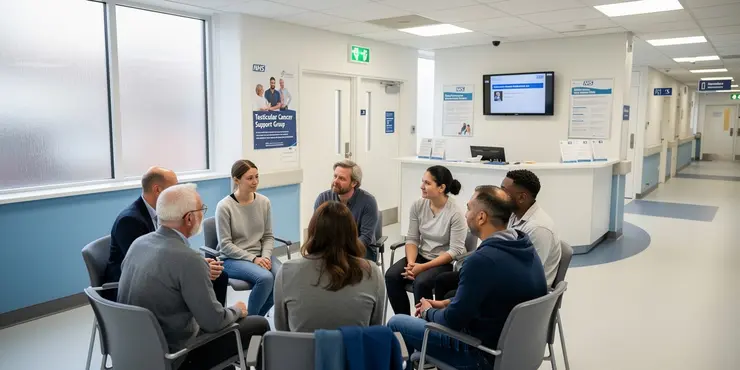
Testicular cancer, though relatively rare, can have profound impacts on those affected and their families. In the UK, several support groups offer vital resources and a sense of community for patients, survivors, and families dealing with testicular cancer. These groups provide emotional support, practical advice, and help individuals navigate the complexities of a cancer diagnosis and treatment.
Benefits of Joining a Support Group
Joining a support group can significantly benefit individuals affected by testicular cancer. These groups offer a platform to share experiences, learn from others, and receive emotional and psychological support. They help reduce feelings of isolation and anxiety by connecting individuals with others who understand what they're going through. In addition to emotional backing, members of support groups often gain access to valuable resources, including information about the latest treatments and strategies for managing side effects.
Online Support Groups
In recent years, online support groups have become increasingly popular, offering convenience and accessibility. Platforms such as HealthUnlocked provide online communities where individuals can share experiences and support each other without geographical limitations. The Testicular Cancer Network on HealthUnlocked is one such group offering peer-to-peer support 24/7. These groups are moderated to ensure a safe and respectful environment.
In-Person Support Groups and Charities
In addition to online platforms, several charities and organisations in the UK offer face-to-face support group meetings. Macmillan Cancer Support offers regular meetings where patients can interact with others in similar situations. They provide expert advice and emotional support through their helpline and local information centres. Orchid, a UK-based charity focusing on male-specific cancers, offers a wide range of support services, including awareness campaigns and patient information.
Specialist Counselling and Support Services
Cancer-specific emotional support services are also available for individuals requiring more personalised support. Organisations like Penny Brohn UK provide holistic support, focusing on psychological well-being alongside conventional treatment. These services often include counselling, complementary therapies, and workshops to help individuals manage the emotional and physical impacts of cancer.
Finding the Right Support Group
Choosing the right support group can be an important decision in managing life with testicular cancer. Patients are encouraged to explore different options to find a group that best meets their needs. Consulting with healthcare providers, who are often familiar with local and national resources, can be a helpful step in finding a suitable group.
Conclusion
For those affected by testicular cancer in the UK, support groups offer a vital resource for navigating the journey through diagnosis, treatment, and beyond. Whether through online platforms or face-to-face meetings, these groups provide essential emotional support and information, helping individuals and their families feel less alone during a challenging time.
Overview of Support Groups for Testicular Cancer in the UK
Testicular cancer is a kind of cancer that does not happen often. But it can be very hard for the person and their family. In the UK, there are many groups that help people with testicular cancer. These groups give emotional support and useful advice. They help people understand and deal with cancer.
Benefits of Joining a Support Group
Joining a support group can help people with testicular cancer a lot. These groups let people share stories and learn from each other. They offer emotional support and help people feel less lonely. The groups also give important information about new treatments and ways to handle side effects.
Online Support Groups
Online support groups are very popular today because they are easy to join. Websites like HealthUnlocked let people talk and support each other from anywhere. The Testicular Cancer Network on HealthUnlocked is a place where people can help each other all the time. These groups are watched to make sure they are safe and respectful.
In-Person Support Groups and Charities
Besides online groups, there are charities and organizations in the UK that have meetings in person. Macmillan Cancer Support has regular meetings where people can meet others in similar situations. They give expert advice and have a helpline and local centers for more help. Orchid is a charity in the UK that helps with male cancers. They offer many support services and raise awareness.
Specialist Counselling and Support Services
There are special support services for people who need more personal help. Penny Brohn UK is one such organization. They focus on helping people feel better in mind and body. They offer counselling, therapies, and workshops to help people handle cancer's effects.
Finding the Right Support Group
Finding the right support group is important for living with testicular cancer. People should look at different groups to find the best one for them. Talking to doctors can help, as they often know about local and national groups.
Conclusion
For people with testicular cancer in the UK, support groups are very helpful. They help people through diagnosis, treatment, and beyond. Whether online or in person, these groups give important emotional support and information, making people and their families feel less alone during this tough time.
Frequently Asked Questions
Support groups for those affected by testicular cancer are communities where patients, survivors, and caregivers can share experiences, offer support, and find strength during their cancer journey.
You can find a support group for testicular cancer by checking with hospitals, cancer treatment centers, or organizations like the American Cancer Society. Online resources and forums are also available.
Yes, there are online support groups for testicular cancer. Websites like CancerCare and social media platforms have groups where you can connect with others virtually.
Yes, joining a support group can provide emotional support, valuable information, coping strategies, and a sense of community for testicular cancer patients.
Yes, many support groups welcome family members and caregivers to provide them with support and information on how to best assist their loved ones.
Yes, some support groups focus on young adults with testicular cancer, addressing their unique concerns and providing peer support.
Most support groups for testicular cancer are free to join, but it's best to check with the specific group for any associated costs.
The frequency of meetings can vary, with some groups meeting weekly, bi-weekly, or monthly. Online groups may have ongoing discussions.
Yes, you can start your own support group for testicular cancer by reaching out to local hospitals or community centers and using online platforms to organize meetings.
Topics can include treatment options, side effects, emotional challenges, lifestyle changes, and personal experiences related to testicular cancer.
Yes, organizations like the Testicular Cancer Society and the American Cancer Society offer support, resources, and helplines for those affected by testicular cancer.
Yes, many online support groups allow participants to remain anonymous to encourage open discussion while protecting privacy.
Online support groups offer convenience, a wider network of contacts, privacy, and the ability to access support from anywhere at any time.
It's important to try different groups to see where you feel most comfortable and supported. You may find one that aligns with your needs and preferences.
Some support groups may have professional facilitators or guest speakers, but they primarily offer peer support. For professional counseling, seek out qualified therapists.
Yes, you can join multiple support groups to get different perspectives and support networks.
Yes, there are support groups specifically for survivors of testicular cancer, focusing on long-term health, wellness, and survivorship issues.
Consider whether the group provides emotional support, helpful information, and a comfortable environment for sharing. Feedback from other participants can also be indicative.
Yes, many support groups share information about medical advances, research findings, and new treatment options for testicular cancer.
Healthcare professionals may facilitate discussions, provide reliable medical information, and help educate members about testicular cancer and treatment options.
Support groups for people who have testicular cancer are like teams. In these groups, patients, people who survived cancer, and caregivers come together. They talk about their experiences, help each other, and find courage on their cancer journey.
You can find a group to help you with testicular cancer by talking to hospitals or places that treat cancer. You can also ask the American Cancer Society. There are also websites and chat groups online where you can get help.
Yes, there are online help groups for people with testicular cancer. Websites like CancerCare and places like Facebook have groups where you can talk to others online.
Yes, joining a support group can help. It can give support, helpful information, ways to cope, and a feeling of being part of a group for people with testicular cancer.
Yes, many support groups are happy to have family and caregivers join. They can help you learn how to support your loved ones better.
Yes, there are groups that help young adults with testicular cancer. These groups listen to their special worries and let them talk with others like them.
Most support groups for testicular cancer do not cost money to join. But it is a good idea to ask the group if there are any costs.
Groups can meet at different times. Some groups meet every week. Some meet every two weeks. Others meet once a month. If it's an online group, people can talk all the time.
Yes, you can make your own support group for testicular cancer. You can ask local hospitals or community centers for help. You can also use the internet to set up meetings.
We can talk about:
- How to treat testicular cancer
- What might happen to your body (side effects)
- How you might feel inside (emotional challenges)
- Changes you might need to make in your daily life
- Stories from people who have had testicular cancer
Here are some tools that might help:
- Talking to someone who is good at listening
- Using picture books or simple guides
- Watching videos that explain things clearly
Yes, there are groups that can help people with testicular cancer. The Testicular Cancer Society and the American Cancer Society are two of them. They have support, information, and phone lines you can call for help.
Yes, many online support groups let people hide their names. This helps everyone talk freely and keeps their privacy safe.
Online support groups are helpful. You can use them easily. They help you meet many people. They keep your information private. You can use them anywhere and anytime.
Try joining different groups. This way, you can find one where you feel happy and get lots of help. Some groups may feel better for you.
Some support groups have people who help run the meetings or special guests who talk to the group. But mostly, they are there for people to help each other. If you want to talk to a professional counselor, look for a therapist who is trained to help.
Yes, you can join more than one support group. This helps you hear different ideas and make more friends who can help you.
Yes, there are groups that help people who had testicular cancer. These groups talk about how to stay healthy and live well after cancer.
Think about if the group helps you feel good, gives you useful information, and is a nice place to talk. Listening to what others in the group say can also help you know if it's a good group.
Yes, many support groups can help you. They tell you about new medical news, research, and treatments for testicular cancer.
Doctors and nurses can help people talk about testicular cancer. They can give good information and explain different ways to treat it. They can also teach people about it so they understand better.

Ergsy Search Results
This website offers general information and is not a substitute for professional advice.
Always seek guidance from qualified professionals.
If you have any medical concerns or need urgent help, contact a healthcare professional or emergency services immediately.
Some of this content was generated with AI assistance. We've done our best to keep it accurate, helpful, and human-friendly.
- Ergsy carefully checks the information in the videos we provide here.
- Videos shown by Youtube after a video has completed, have NOT been reviewed by ERGSY.
- To view, click the arrow in centre of video.
- Most of the videos you find here will have subtitles and/or closed captions available.
- You may need to turn these on, and choose your preferred language.
- Go to the video you'd like to watch.
- If closed captions (CC) are available, settings will be visible on the bottom right of the video player.
- To turn on Captions, click settings.
- To turn off Captions, click settings again.