
Get Answers
Introduction to Profession-Specific First Aid Courses
In the UK, first aid knowledge is not only beneficial but often essential in various professional settings. Different professions have unique risks and environments, necessitating tailored first aid training to ensure safety and compliance with health and safety regulations. As a result, specific first aid courses have been developed to meet the distinct needs and legislative requirements of various industries.
First Aid for Healthcare Professionals
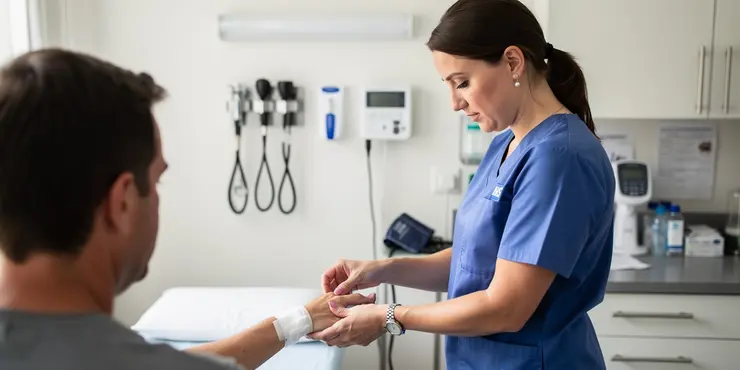
Healthcare professionals, including nurses, doctors, and medical assistants, require advanced first aid skills due to their involvement in patient care. Courses such as Basic Life Support (BLS) and Immediate Life Support (ILS) provide these professionals with the necessary skills to perform CPR, manage choking incidents, and handle cardiac emergencies efficiently.
First Aid in the Construction Industry
The construction industry is one of the most hazardous fields, with high risks for injuries such as falls, cuts, and crush incidents. Consequently, specific first aid courses cater to these potential risks. Construction workers typically undertake the "Emergency First Aid at Work" (EFAW) course, which focuses on treating common injuries within the construction environment. Site managers may pursue more comprehensive training such as the "First Aid at Work" (FAW) course.
First Aid for School Teachers
Teachers and education staff face unique challenges, especially when working with children. First aid courses for teachers often include paediatric first aid training, focusing on handling injuries common among children, such as nosebleeds, sprains, and playground accidents. The "Paediatric First Aid" course is designed to equip teachers and childcare providers with the skills to manage such emergencies effectively.
First Aid in the Hospitality Sector
In the hospitality industry, staff members frequently encounter minor injuries such as burns, cuts, and slips. Consequently, tailored first aid courses cover these common incidents, enabling staff to administer immediate care effectively. Furthermore, staff trained in first aid contribute to creating a safe environment for both employees and guests.
Compliance with Health and Safety Regulations
UK health and safety regulations mandate that employers ensure adequate first aid provisions in the workplace. Tailored first aid courses not only equip employees with critical skills but also help organisations comply with legal obligations. By aligning first aid training with industry-specific hazards, companies can efficiently manage risks and enhance workplace safety.
Conclusion
First aid training adapted to specific professional environments is crucial in addressing the particular risks present across different sectors. By undertaking appropriate first aid courses, professionals are better equipped to respond to emergencies relevant to their industry, ensuring both personal safety and well-being and compliance with regulatory requirements.
Introduction to Special First Aid Courses for Different Jobs
In the UK, knowing first aid is very helpful and often necessary for different jobs. Each job has its own dangers, so special first aid training is needed to keep everyone safe. This training also helps meet health and safety rules. That is why there are special first aid courses for different kinds of work.
First Aid for Health Workers
People like nurses and doctors need special first aid skills because they take care of patients. Courses like Basic Life Support (BLS) and Immediate Life Support (ILS) teach them how to do CPR, help someone who is choking, and take care of heart problems quickly.
First Aid in Building and Construction
Building sites can be very dangerous places, with risks like falls or cuts. So, there are special first aid courses for construction workers. Workers usually take the "Emergency First Aid at Work" (EFAW) course to learn how to treat injuries common in construction. Site managers might need more detailed training, like the "First Aid at Work" (FAW) course.
First Aid for School Teachers
Teachers deal with children, who can get hurt in different ways, like having a nosebleed or falling. There are first aid courses for teachers that focus on kids’ injuries. The "Paediatric First Aid" course helps teachers and childcare workers learn how to handle these kinds of accidents well.
First Aid in Hotels and Restaurants
In hotels and restaurants, staff might see small injuries like burns or cuts. So, there are special first aid courses for these situations. Staff trained in first aid can make sure everyone stays safe, including employees and guests.
Following Safety Rules
In the UK, the law says employers must have enough first aid help at work. Special first aid courses give workers important skills and help companies follow the law. By having training that matches the dangers at work, businesses keep people safe and follow the rules.
Conclusion
Having the right first aid training for different jobs is important to manage the risks at work. By learning specific first aid skills, workers can handle emergencies better. This keeps them safe and helps meet safety rules.
Frequently Asked Questions
First aid courses for different professions are training programs tailored to the risks, workplace duties, and emergency needs of specific jobs, such as teachers, construction workers, childcare staff, healthcare workers, office employees, and hospitality teams.
They are important because different jobs face different hazards, and profession-specific first aid training helps people respond more effectively to injuries, illnesses, or emergencies common in their work environment.
Anyone whose job involves responsibility for others, exposure to workplace risks, or legal or employer training requirements should consider first aid courses for different professions, including supervisors, staff members, and safety officers.
Professions that benefit most include teachers, childcare workers, construction crews, healthcare support staff, warehouse teams, fitness instructors, hospitality workers, security staff, and transport employees.
First aid courses for different professions usually focus on the injuries and emergencies most likely in a specific job, while general first aid training provides broader, more universal emergency response skills.
Topics often include CPR, choking response, bleeding control, burns, fractures, shock, seizures, allergic reactions, workplace incident reporting, and job-specific hazards relevant to the profession.
Yes, most first aid courses for different professions include CPR training because it is a core emergency skill needed in many workplace situations.
In some industries and locations, certain first aid courses for different professions may be required by law, regulation, licensing bodies, or employer policy, depending on the role and workplace risk level.
The length of first aid courses for different professions varies by provider and profession, but they may range from a few hours to one or more days depending on the depth of training and certification needs.
Renewal periods vary by employer, regulator, and training provider, but many first aid courses for different professions should be refreshed every one to three years to keep skills current.
Yes, many providers can customize first aid courses for different professions to match workplace hazards, industry standards, shift patterns, and the specific needs of staff.
Online first aid courses for different professions can be effective for learning theory and procedures, but hands-on skills like CPR and wound care often benefit from in-person practical assessment.
Specialized training is especially useful for professions with unique risks, such as laboratory staff, electricians, childcare providers, manufacturing workers, outdoor field teams, and food service employees.
Choose first aid courses for different professions by considering workplace hazards, legal requirements, certification standards, instructor quality, hands-on practice, and whether the course matches the specific job role.
Most first aid courses for different professions provide a certificate or statement of attainment if the participant successfully completes the required training and assessment.
You will typically learn how to assess an emergency, call for help, perform CPR, manage bleeding, treat common injuries, and respond to profession-specific incidents safely and calmly.
Yes, first aid courses for different professions can help reduce the impact of workplace accidents by improving early response, encouraging safety awareness, and teaching staff how to act quickly in emergencies.
The cost of first aid courses for different professions depends on the provider, course length, certification level, group size, and whether the training is delivered on-site or at a training center.
Yes, many first aid courses for different professions include hands-on practice, which is important for building confidence and learning practical emergency response skills.
You can find first aid courses for different professions through accredited training providers, industry associations, workplace safety organizations, community colleges, and certified online learning platforms.

Ergsy Search Results
This website offers general information and is not a substitute for professional advice.
Always seek guidance from qualified professionals.
If you have any medical concerns or need urgent help, contact a healthcare professional or emergency services immediately.
Some of this content was generated with AI assistance. We've done our best to keep it accurate, helpful, and human-friendly.
- Ergsy carefully checks the information in the videos we provide here.
- Videos shown by Youtube after a video has completed, have NOT been reviewed by ERGSY.
- To view, click the arrow in centre of video.
- Most of the videos you find here will have subtitles and/or closed captions available.
- You may need to turn these on, and choose your preferred language.
- Go to the video you'd like to watch.
- If closed captions (CC) are available, settings will be visible on the bottom right of the video player.
- To turn on Captions, click settings.
- To turn off Captions, click settings again.