
Get Answers
Reporting patient safety worries in a hospital
If you are worried about patient safety in a UK hospital, it is important to speak up quickly. Concerns can include medication mistakes, poor handover, missed checks, or unsafe staffing. Early reporting can help prevent harm to you or to another patient.
You do not need to be sure something is “serious enough” before raising it. If something does not look right, ask a nurse, pharmacist, doctor, or ward manager straight away. Hospitals are expected to listen and take concerns seriously.
Where to report medication mistakes
The first step is usually to tell the staff looking after the patient, such as the nurse in charge or the ward doctor. If the mistake involves a prescription, a pharmacist may also need to review it. Ask for the issue to be checked and corrected immediately if needed.
If you are unhappy with the response, you can ask to speak to the ward manager or the nurse in charge of the shift. Most hospitals also have a Patient Advice and Liaison Service, known as PALS, which can help you raise concerns. PALS can support you if you are worried that a medication error has not been handled properly.
What details to share
When reporting a concern, try to give clear facts. Include the patient’s name, ward, the medicine involved, what happened, and when it happened. If possible, explain what effect the mistake may have had.
It can help to write down names, dates, and times while the details are fresh. If you saw tablets given at the wrong time, a dose missed, or the wrong medicine supplied, say exactly what you noticed. Clear information makes it easier for staff to act quickly.
What happens next
The hospital should assess the risk and take action to keep the patient safe. This may include monitoring the patient, contacting a doctor, changing the prescription, or explaining the error and any follow-up needed. Some incidents may also be reviewed as part of the hospital’s safety reporting system.
You should not be ignored or made to feel awkward for raising a concern. In the NHS, staff are encouraged to report safety incidents and near misses so lessons can be learned. If you feel the hospital has not responded properly, you can ask for a formal complaint process.
Other ways to get help
If the concern is urgent and the patient may be at immediate risk, call for help from staff on the ward straight away. If you need further support, PALS can explain the next steps and help you find the right person to contact. You can also ask for an interpreter or advocate if language or communication is a barrier.
Keeping patients safe is a shared responsibility, and speaking up can prevent further harm. Even small medication errors matter, especially if they involve allergies, blood thinners, insulin, or strong pain relief. Reporting worries early helps hospitals learn and improve care.
Frequently Asked Questions
Reporting patient safety worries hospital medication mistakes where to report means telling the right hospital or external safety team about concerns or errors involving medicines. It matters because prompt reporting can help protect the patient, prevent repeat mistakes, and trigger review and improvement.
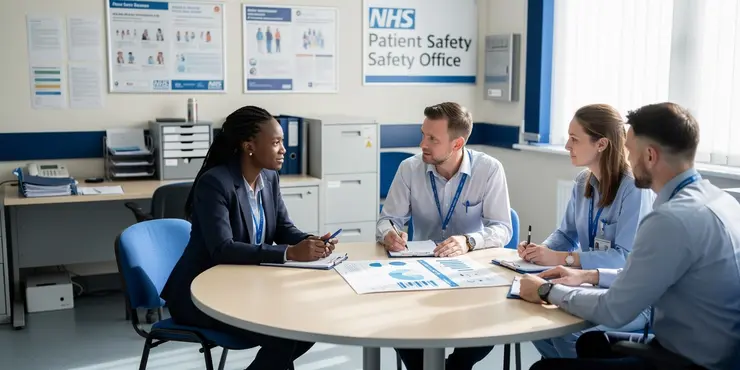
You should usually report to the nurse in charge, the ward manager, the attending doctor, the hospital pharmacy team, or the hospital patient safety or risk management office. Many hospitals also have a formal incident reporting system or patient relations line.
If a patient does not trust the ward staff, they can ask for the hospital patient relations department, the patient advocate, the clinical governance team, or the hospital switchboard to direct them to the patient safety office. If urgent, they should still seek immediate clinical help first.
A family member, caregiver, or legal representative can report concerns if they are involved in the patient's care or have the patient's permission. They should give the patient's name, the medication involved, what happened, and when it occurred.
Useful information includes the patient's name, date of birth, ward or department, the medication name if known, what mistake or worry occurred, when it happened, who was involved if known, and whether the patient had any symptoms or harm.
If the patient feels unwell, reporting should be immediate and clinical staff should be alerted right away. Symptoms like breathing problems, rash, severe drowsiness, confusion, chest pain, bleeding, or collapse require urgent medical attention before or while the report is made.
In many places, yes, anonymous reporting is possible through hospital safety systems, hotlines, or external regulators. However, giving contact details can help staff follow up and get more information to investigate properly.
If there is no response, follow up with the ward, patient relations, or the hospital safety office, and ask for a reference number. If the concern remains unresolved, you may escalate to the hospital complaints process or the relevant external regulator.
Yes, you can report after discharge if you later realize there was a medication error or ongoing safety concern. Include dates, discharge summary details if available, and any symptoms or after-effects experienced at home.
Ask the ward staff, switchboard, or patient relations office to connect you with the pharmacy team. Provide the medicine name, dose if known, prescription time, and what seemed wrong so pharmacy staff can review it quickly.
Report the missed dose to the nurse or doctor as soon as possible and ask whether it should still be given. Record the time, the medication name if known, and whether the patient has any new symptoms.
Tell clinical staff immediately because wrong doses can cause harm even if the patient seems fine. The team may need to monitor the patient, repeat observations, order tests, or give a treatment to reduce risk.
Alert staff immediately and make sure the allergy is clearly documented. If the patient has symptoms such as rash, swelling, wheeze, or dizziness, urgent medical assessment is needed right away.
Depending on the issue, the ward manager, pharmacist, doctor, patient safety team, or risk management team may investigate. Serious incidents may also be reviewed by a formal incident review or safety committee.
It should not negatively affect care. Patients and families have the right to raise safety concerns, and hospitals are expected to respond professionally and continue providing appropriate treatment.
Yes, visitors can report if they notice a medication concern, such as a missing wristband check, an unclear prescription, or a medicine being given to the wrong patient. They should alert staff immediately and provide factual details.
External options may include a national health service complaint line, a healthcare regulator, a medicines safety authority, or an ombudsman, depending on the country. Emergency symptoms should still be handled by hospital staff or emergency services first.
Write down the date, time, location, names of staff if known, what happened, what was said, and any reference number you receive. Keeping notes helps if you need to follow up or escalate the concern.
The hospital should review the report, assess any immediate risk, document the incident, and decide whether further investigation or changes are needed. They may also contact the patient or family for more details or to explain next steps.
Be clear, factual, and specific about what you observed and why it is unsafe. Use the hospital's formal reporting route, ask for a reference number, and escalate to patient relations or a safety lead if the concern is not addressed promptly.

Ergsy Search Results
This website offers general information and is not a substitute for professional advice.
Always seek guidance from qualified professionals.
If you have any medical concerns or need urgent help, contact a healthcare professional or emergency services immediately.
Some of this content was generated with AI assistance. We've done our best to keep it accurate, helpful, and human-friendly.
- Ergsy carefully checks the information in the videos we provide here.
- Videos shown by Youtube after a video has completed, have NOT been reviewed by ERGSY.
- To view, click the arrow in centre of video.
- Most of the videos you find here will have subtitles and/or closed captions available.
- You may need to turn these on, and choose your preferred language.
- Go to the video you'd like to watch.
- If closed captions (CC) are available, settings will be visible on the bottom right of the video player.
- To turn on Captions, click settings.
- To turn off Captions, click settings again.