
Get Answers
Understanding Indefinite Sentences
Indefinite sentences, often referred to as Indeterminate Public Protection (IPP) sentences, are given to prisoners whose release date is not fixed. In the UK, these sentences aim to protect the public from individuals considered to be a high risk of committing further offenses.
The length of time a prisoner with an IPP sentence serves depends on their progress and any perceived ongoing risk to society. As such, rehabilitation and behavior assessment programs are critical components in determining their release.
Rehabilitation Programs
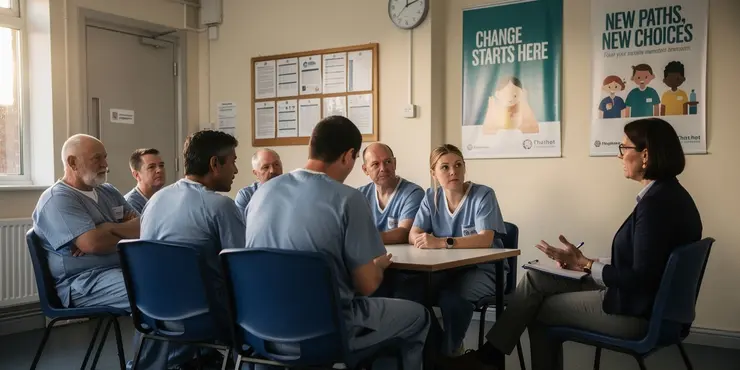
The UK prison system offers various rehabilitation programs tailored to prisoners with indefinite sentences. These programs target different aspects, including anger management, substance abuse, and cognitive behavioral therapy.
Participating in these programs can demonstrate a prisoner's commitment to change and may positively influence the Parole Board's decisions. Successful completion often serves as evidence of reduced risk to the public.
Educational Opportunities
Prisoners with indefinite sentences also have access to educational programs designed to improve literacy, numeracy, and vocational skills. Education is considered a key component in reducing reoffending rates.
The acquisition of new skills and qualifications can aid a prisoner's reintegration into society. Furthermore, it provides them with constructive use of time and enhances personal development while incarcerated.
Psychological Support
Psychological assessments and support play a crucial role in the rehabilitation of prisoners serving indefinite sentences. Prisoners often undergo psychological evaluations to determine their readiness for release.
Counseling and therapy sessions are available to address underlying mental health issues. Effective psychological intervention can be instrumental in reducing recidivism among these prisoners.
Post-Release Support
Once released, former prisoners with indefinite sentences may receive post-release support to facilitate their transition back into society. This support can include finding housing, employment, and continued mental health care.
Ensuring a network of support helps mitigate the risks of reoffending. Ongoing monitoring and assistance are crucial for maintaining the progress made during incarceration.
Frequently Asked Questions
Special programs for prisoners with indefinite sentences are initiatives aimed at providing education, rehabilitation, and support to those serving uncertain or life sentences.
These programs are needed because prisoners with indefinite sentences often face unique challenges, including prolonged incarceration and limited opportunities for parole, requiring targeted support to aid in their rehabilitation and mental health.
Yes, many special programs for prisoners with indefinite sentences include educational opportunities to help inmates gain new skills and qualifications.
Yes, mental health services are often a critical component of special programs for prisoners with indefinite sentences, helping them cope with long-term incarceration.
Vocational training is commonly offered as part of special programs to equip prisoners with practical skills for future employment opportunities.
Support groups are often available to provide emotional and psychological support for prisoners dealing with the uncertainty of an indefinite sentence.
These programs may include family counseling and visitation arrangements to help maintain family ties, which is important for rehabilitation.
Yes, cultural and arts programs are often included to promote creativity, self-expression, and provide a sense of accomplishment.
Religious and spiritual guidance is typically available as part of these programs to provide moral support and help prisoners find inner peace.
Special programs prepare prisoners for parole by offering life skills training, counseling, and helping them develop a plan for reintegration into society.
Comprehensive healthcare services, including medical and psychiatric care, are usually a part of these programs to ensure inmates' well-being.
Yes, some special programs incorporate restorative justice practices to help prisoners understand the impact of their actions and work toward reconciliation.
Individualized support is often provided to cater to the specific needs and circumstances of each prisoner, aiding in their rehabilitation process.
Life skills development is a core component, teaching prisoners essential skills for independent living and responsible decision-making.
Volunteer organizations usually collaborate to provide mentorship, educational support, and additional resources to enhance the quality of life for these prisoners.
Yes, there are specialized programs addressing substance abuse issues, providing treatment and support for overcoming addiction.
Offerings are usually determined based on individual assessments conducted by correctional staff to identify the most suitable programs for each prisoner.
Programs often focus on building self-esteem and confidence through personal development workshops and various supportive activities.
Certain programs offer opportunities for higher education, either through correspondence courses or partnerships with educational institutions.
Success is typically measured through recidivism rates, personal growth assessments, and the ability of inmates to achieve educational and vocational milestones.

Ergsy Search Results
This website offers general information and is not a substitute for professional advice.
Always seek guidance from qualified professionals.
If you have any medical concerns or need urgent help, contact a healthcare professional or emergency services immediately.
Some of this content was generated with AI assistance. We've done our best to keep it accurate, helpful, and human-friendly.
- Ergsy carefully checks the information in the videos we provide here.
- Videos shown by Youtube after a video has completed, have NOT been reviewed by ERGSY.
- To view, click the arrow in centre of video.
- Most of the videos you find here will have subtitles and/or closed captions available.
- You may need to turn these on, and choose your preferred language.
- Go to the video you'd like to watch.
- If closed captions (CC) are available, settings will be visible on the bottom right of the video player.
- To turn on Captions, click settings.
- To turn off Captions, click settings again.