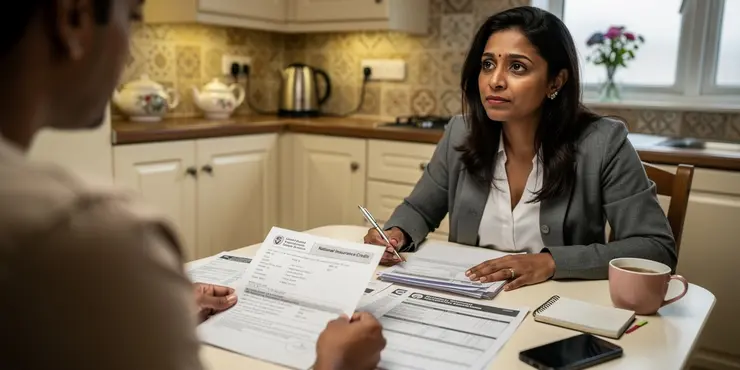

Get Answers
Understanding Credits for the Basic State Pension
The UK Basic State Pension is a regular payment provided by the government to individuals who have reached State Pension age. It is based on National Insurance contributions made during a person's working life. However, there are situations where an individual might not be able to work or make these contributions. Fortunately, the government provides National Insurance credits that can help fill these gaps.
What Are National Insurance Credits?
National Insurance credits are designed to protect your National Insurance record and ensure you have enough years of contributions for the Basic State Pension. They can be extremely beneficial if you’re unable to work due to various circumstances such as illness, unemployment, or caring responsibilities. Credits help maintain your contribution record, which determines the amount of State Pension you receive.
Who Is Eligible for Credits?
Several groups of people can receive National Insurance credits. These include those on certain benefits, like Jobseeker's Allowance or Employment and Support Allowance. If you are a carer, you might be eligible through Carer’s Credit. Parents with young children under 12 who receive Child Benefit also qualify for credits. Moreover, individuals on maternity, paternity, or adoption leave can qualify. Furthermore, members of the armed forces or their spouses who accompany them overseas can apply for credits.
How to Claim National Insurance Credits
The process for claiming National Insurance credits depends on your situation. Some credits are automatic if you're receiving state benefits, while others may require an application. For example, Carer’s Credit requires you to complete a form with evidence of your caring responsibilities. Always ensure you check your eligibility and understand the process because missing out on credits could affect your future State Pension.
The Impact on State Pension
Every qualifying year of National Insurance contributions or credits boosts your Basic State Pension. For the full Basic State Pension, you need a specific number of qualifying years, which currently varies based on your birth date and gender. If you don't have enough years due to gaps in your contribution record, you may receive a reduced pension, making credits important in maintaining future financial security.
Checking Your National Insurance Record
It is prudent to regularly check your National Insurance record to ensure you have sufficient contributions and credits. The UK government provides an online service where you can view your record, see any gaps, and learn about filling them. This proactive approach will help you plan effectively for retirement and ensure you receive the maximum possible State Pension.
Understanding Credits for the Basic State Pension
The UK Basic State Pension is money the government gives to people who have reached a certain age. You get it if you have paid enough National Insurance (NI) during your life. But sometimes people can't work and pay enough NI. The good news is, the government can give you something called NI credits to help fill in the gaps.
What Are National Insurance Credits?
National Insurance credits help you keep a good record for your State Pension. They are useful if you can't work because you are sick, looking for a job, or taking care of someone. Credits help make sure you still get the right amount of State Pension when you are older.
Who Is Eligible for Credits?
Lots of people can get NI credits. If you get benefits like Jobseeker's Allowance (for people looking for work) or Employment and Support Allowance (if you can't work because you're sick), you might get credits. If you care for someone, you could get Carer’s Credit. Parents with kids under 12 who get Child Benefit can also get credits. People on maternity, paternity, or adoption leave can qualify too. Even if you’re in the armed forces or are their spouse living abroad, you can apply.
How to Claim National Insurance Credits
How you get NI credits depends on your situation. Some credits are automatic if you get certain benefits, but others you must apply for. For example, to get Carer’s Credit, you need to fill out a form and show proof that you care for someone. Always check if you can get credits, and how to apply, because missing credits can affect your future pension.
The Impact on State Pension
Each year you pay NI or get credits helps you get more State Pension money. To get a full State Pension, you need enough qualifying years. If you don't have enough because of gaps, your pension might be smaller. So, NI credits are important to help keep your future money safe.
Checking Your National Insurance Record
It's a good idea to check your NI record often to make sure you have enough contributions and credits. The UK government has a website where you can see your record, check for gaps, and find out how to fill them. This will help you plan for retirement and make sure you get the most pension money you can.
Frequently Asked Questions
Credits are contributions awarded in certain situations where you are unable to work, helping to fill gaps in your National Insurance record for State Pension eligibility.
Yes, if you are receiving Jobseeker's Allowance, you will automatically receive National Insurance credits.
Yes, if you are receiving certain sickness benefits like Employment and Support Allowance, you will be credited.
Yes, if you are a carer receiving Carer's Allowance or meet the criteria for Carer's Credit, you can receive credits.
Yes, if you are receiving Child Benefit for a child under 12, you can receive credits automatically.
Yes, you will typically receive credits if you received Maternity Allowance or Statutory Maternity, Paternity, or Adoption Pay.
Yes, members of the armed forces are awarded credits during their period of service.
You might be eligible for credits if you receive benefits such as Employment and Support Allowance.
Yes, during specific periods impacted by the pandemic, special provisions were made for those unable to work.
Generally, full-time students do not receive National Insurance credits unless they fall into another eligible category.
Yes, you can make voluntary Class 3 National Insurance contributions to fill gaps in your record.
Yes, if you are receiving certain disability benefits, you will automatically qualify for credits.
Yes, foster parents can apply for Specified Adult Childcare credits when eligible.
No, choosing early retirement without illness or eligible circumstances typically does not qualify for credits.
Yes, grandparents and other family members caring for children under 12 can apply for Specified Adult Childcare credits.
Volunteering does not typically affect credits unless it impacts benefits you receive, like Jobseeker's Allowance.
If you are living in an EEA country or one with a social security agreement with the UK, you might still be eligible for credits.
If your earnings are below the threshold, you can still earn credits if your employer submits PAYE information showing your income.
Some credits are automatic if you are receiving certain benefits, but others, like Carer's Credit, require an application.
You can request a State Pension forecast from the UK Government to see your National Insurance record and any gaps.
Credits are a way to help you get State Pension even when you can't work. They fill in gaps in your National Insurance record.
Yes, if you get Jobseeker's Allowance, you will also get National Insurance credits. You do not need to do anything extra to get them.
If you get money because you are sick, like Employment and Support Allowance, you will still get your credits.
Yes, if you take care of someone and get Carer's Allowance, or if you can get Carer's Credit, you can get credits.
Yes, if you get Child Benefit for a child under 12, you will get credits automatically.
Yes, you will usually get credits if you got Maternity Allowance or Statutory Maternity, Paternity, or Adoption Pay.
Yes, people who work in the army, navy, or air force get credits while they are serving.
You can get credits if you get help like Employment and Support Allowance.
Yes, when the pandemic happened, special rules were made to help people who could not work.
Most full-time students do not get National Insurance credits. But, some students might get them if they are in a special group that can get credits.
Yes, you can choose to pay extra to fill in missing parts of your National Insurance record. This is called making voluntary Class 3 contributions.
If you get some disability benefits, you can get credits right away without doing anything extra.
Yes, foster parents can ask for special credits for childcare if they can get them.
No, if you decide to stop working and retire early, you usually do not get extra credits. You only get credits if you are sick or have special reasons.
Yes, grandparents and other family members who look after children younger than 12 years old can ask for Specified Adult Childcare credits.
Helping others for free usually does not change your credits. But if you get benefits, like Jobseeker’s Allowance, it might matter.
If you live in a country in the EEA, or a country that has an agreement with the UK, you might still get credits.
If you do not make a lot of money, you can still get credit. Your boss just needs to send your income information to the tax office.
If you get some benefits, you might get credits without doing anything. But if you take care of someone and want Carer's Credit, you need to apply for it.
You can ask the UK Government for a State Pension forecast. This will show you your National Insurance record and any missing parts.

Ergsy Search Results
This website offers general information and is not a substitute for professional advice.
Always seek guidance from qualified professionals.
If you have any medical concerns or need urgent help, contact a healthcare professional or emergency services immediately.
Some of this content was generated with AI assistance. We've done our best to keep it accurate, helpful, and human-friendly.
- Ergsy carefully checks the information in the videos we provide here.
- Videos shown by Youtube after a video has completed, have NOT been reviewed by ERGSY.
- To view, click the arrow in centre of video.
- Most of the videos you find here will have subtitles and/or closed captions available.
- You may need to turn these on, and choose your preferred language.
- Go to the video you'd like to watch.
- If closed captions (CC) are available, settings will be visible on the bottom right of the video player.
- To turn on Captions, click settings.
- To turn off Captions, click settings again.