
Get Answers
Support groups for people with dementia in the UK
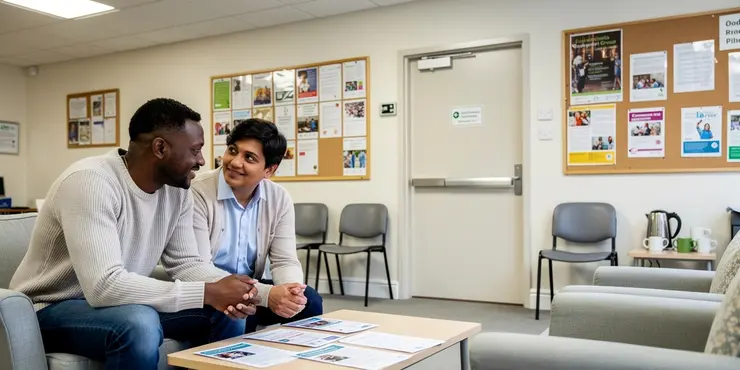
Yes, there are many support groups for people with dementia across the UK. These groups can offer emotional support, practical advice, and a chance to meet others who understand what living with dementia is like.
Support may be available in person, over the phone, or online. Some groups are for the person with dementia, while others are aimed at family members and carers.
Where to find support
Alzheimer’s Society is one of the main sources of support in the UK. It runs services such as Dementia Support Workers, local groups, online communities, and a helpline.
Many areas also have support groups run by local councils, NHS services, charities, churches, and community centres. GP surgeries, memory clinics, and social services can often point people in the right direction.
Types of groups available
Some groups are social, giving people with dementia a safe place to chat, take part in activities, and stay connected. Others focus on shared experiences, coping strategies, or information about symptoms and planning ahead.
There are also peer support groups for carers and relatives. These can be helpful for anyone supporting a partner, parent, friend, or neighbour with dementia.
Online and telephone support
If travelling is difficult, online support groups may be a better option. Many charities now offer virtual meetings, forums, and moderated chat spaces that can be accessed from home.
Telephone helplines can also provide reassurance and guidance. This can be especially useful after a diagnosis, when people may feel uncertain about what to do next.
Benefits of joining a group
Support groups can reduce isolation and help people feel less alone. They may also improve confidence by giving people a chance to share concerns and learn from others.
For some, attending a group becomes part of a regular routine. That sense of structure and connection can be valuable for both the person with dementia and their family.
How to get started
If you are looking for a group, start with your GP, memory clinic, or local authority. You can also contact national charities such as Alzheimer’s Society or Age UK for advice.
It is worth asking what kind of support is offered, whether transport is available, and if the group is suitable for a particular stage of dementia. The right group should feel welcoming, practical, and easy to access.
Frequently Asked Questions
Dementia support groups UK are local or online groups that provide emotional support, practical advice, and a safe space for people living with dementia, carers, family members, and friends to share experiences and learn coping strategies.
Dementia support groups UK are usually open to people living with dementia, unpaid carers, family members, friends, and sometimes professionals or volunteers, depending on the group’s purpose and rules.
You can find dementia support groups UK near you by checking local council services, NHS dementia resources, charities such as Alzheimer’s Society, GP surgeries, libraries, community centres, and online directories.
Many dementia support groups UK are free, especially those run by charities, the NHS, or local community organisations, although some may ask for a small donation or charge for refreshments or specialist activities.
At dementia support groups UK meetings, people usually talk, listen, share experiences, enjoy refreshments, take part in activities, and receive information about dementia, benefits, care, and local support services.
Yes, dementia support groups UK can be very helpful for people in the early stages of dementia because they offer peer support, practical advice, and a chance to stay socially connected.
Yes, dementia support groups UK are often designed for carers and family members as well as the person with dementia, helping them manage stress, learn from others, and access practical guidance.
Yes, dementia support groups UK can reduce isolation and loneliness by creating regular opportunities to meet others, build friendships, and feel understood by people with similar experiences.
Yes, many dementia support groups UK now offer online meetings by video or phone, which can be useful for people who cannot travel, prefer staying at home, or live in rural areas.
To choose the right dementia support groups UK, consider whether the group is for the person with dementia, carers, or both, as well as meeting times, location, accessibility, group size, and whether activities and topics suit your needs.
Many dementia support groups UK aim to be accessible by offering step-free venues, accessible toilets, hearing support, quiet spaces, large-print materials, and patient communication styles, but it is best to check in advance.
Yes, dementia support groups UK can be especially helpful after a recent diagnosis because they provide reassurance, information about what to expect, and support from people who understand the challenges involved.
Dementia support groups UK may discuss memory changes, caring techniques, behaviour changes, emotional wellbeing, benefits, legal and financial planning, respite care, and local services.
Dementia support groups UK may be run by trained volunteers, charity staff, healthcare professionals, or a mix of all three, depending on the organisation and group format.
Yes, dementia support groups UK often provide practical advice about daily routines, communication, safety, managing appointments, planning ahead, and finding local care and support services.
Dementia support groups UK may meet weekly, fortnightly, or monthly, depending on the organiser, local demand, and the type of support the group provides.
Most dementia support groups UK ask members to respect confidentiality so people feel safe sharing personal experiences, although exact rules can vary by group and organiser.
You may want to bring any medication you need, a notebook, questions, contact details for emergencies, and anything else that helps you feel comfortable, although many dementia support groups UK only require you to attend as you are.
To start dementia support groups UK in your local area, contact local charities, community centres, faith groups, the council, or the NHS for advice on venues, volunteers, safeguarding, and promotion.
After attending dementia support groups UK, you may be signposted to helplines, counselling, respite services, memory clinics, benefits advice, carer support, and other local or national dementia services.

Ergsy Search Results
This website offers general information and is not a substitute for professional advice.
Always seek guidance from qualified professionals.
If you have any medical concerns or need urgent help, contact a healthcare professional or emergency services immediately.
Some of this content was generated with AI assistance. We've done our best to keep it accurate, helpful, and human-friendly.
- Ergsy carefully checks the information in the videos we provide here.
- Videos shown by Youtube after a video has completed, have NOT been reviewed by ERGSY.
- To view, click the arrow in centre of video.
- Most of the videos you find here will have subtitles and/or closed captions available.
- You may need to turn these on, and choose your preferred language.
- Go to the video you'd like to watch.
- If closed captions (CC) are available, settings will be visible on the bottom right of the video player.
- To turn on Captions, click settings.
- To turn off Captions, click settings again.