
Get Answers
Are there support groups for people with dementia in the UK?
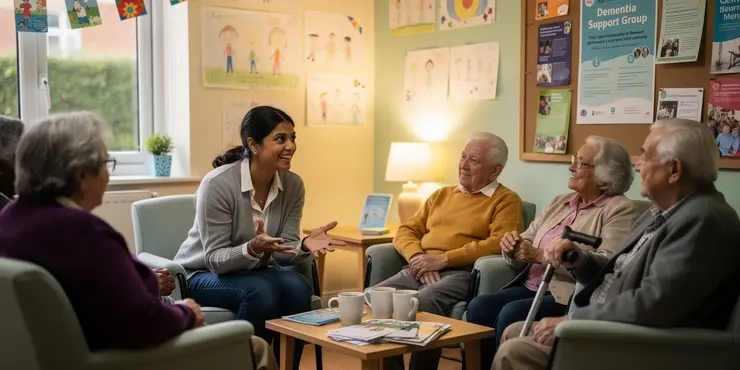
Yes, there are many support groups for people with dementia across the UK. These groups can help people stay connected, share experiences, and feel less isolated after a diagnosis.
Support may be available in person, online, or over the phone. Some groups are for the person living with dementia, while others are for carers, family members, or both.
What kinds of support groups are available?
Some groups focus on social activities, such as coffee mornings, singing, reminiscence sessions, or memory cafes. These can be a relaxed way to meet others in a similar situation.
Other groups are more practical, offering information about symptoms, care options, finances, and local services. Some are run by charities, while others are organised by councils, NHS services, or community centres.
How can support groups help?
Support groups can reduce loneliness and provide reassurance. Talking to people who understand dementia can make day-to-day challenges feel more manageable.
They can also help people build confidence and maintain independence for longer. For carers, support groups often offer emotional support, advice, and a chance to learn from others.
Where can you find one?
Alzheimer’s Society is one of the main sources of dementia support in the UK. Its website has information on local groups, online activities, and helplines.
You can also ask your GP, memory clinic, social worker, or local council about services near you. Many charities and community organisations advertise groups through libraries, GP surgeries, and noticeboards.
What if attending in person is difficult?
If getting out is hard, online support groups can be a useful option. These may take place on Zoom, by phone, or through moderated online forums.
They can be especially helpful for people in rural areas or those who prefer support from home. Some groups also offer respite-friendly sessions so carers can attend alongside the person with dementia.
Getting started
It is a good idea to try a few groups before deciding what feels right. Different groups suit different needs, personalities, and stages of dementia.
If possible, bring a friend or carer to the first session. A welcoming group can make a real difference, and many people find that regular support improves confidence and wellbeing.
Frequently Asked Questions
Support groups for people with dementia in the UK are gatherings where people living with dementia, and sometimes their carers or family members, can share experiences, get emotional support, and learn practical ways to manage daily life. They may be run by charities, NHS-linked services, local councils, or community organisations.
Support groups for people with dementia in the UK are usually open to anyone diagnosed with dementia, and many also welcome carers, partners, family members, and close friends. Some groups are designed for specific stages of dementia or for particular age groups, so it is worth checking the group details before attending.
You can find support groups for people with dementia in the UK through your GP, local memory clinic, local council adult social care team, NHS services, and charities such as Dementia UK, Alzheimer’s Society, and Age UK. Many groups are also listed online, and libraries, community centres, and faith organisations may know about local options.
Many support groups for people with dementia in the UK are free to attend, especially those run by charities, the NHS, or local community services. Some may ask for a small voluntary donation or charge a modest fee for refreshments or activities, so it is best to confirm in advance.
At support groups for people with dementia in the UK, people may talk about their experiences, take part in guided activities, receive advice, or listen to guest speakers. Some groups focus on social interaction and friendship, while others provide information about living well with dementia, benefits, care, and legal planning.
Yes, many support groups for people with dementia in the UK are suitable for people in the early stages of dementia. Some groups are specifically designed for people who have recently been diagnosed and may focus on coping strategies, planning ahead, and maintaining independence.
Yes, many support groups for people with dementia in the UK welcome carers, spouses, adult children, and other family members. Some groups are mixed, while others are separate groups for people with dementia and for carers, depending on the format and purpose of the support group.
Yes, online support groups for people with dementia in the UK are widely available through video calls, telephone groups, and moderated forums. These can be helpful for people who have mobility problems, live in rural areas, or prefer support from home.
Support groups for people with dementia in the UK vary in frequency. Some meet weekly, others fortnightly or monthly, and some run as short-term courses or drop-in sessions. The schedule depends on the organiser and the needs of the group members.
For support groups for people with dementia in the UK, you may want to bring any information the organiser asked for, a drink, hearing aids, glasses, and a notebook if you like to write things down. It can also help to bring emergency contact details and any medication you may need during the session.
Yes, support groups for people with dementia in the UK can help emotional wellbeing by reducing isolation, offering reassurance, and giving people a safe space to talk. Many people find it helpful to meet others who understand dementia firsthand.
Yes, support groups for people with dementia in the UK often provide practical advice on benefits, social care, communication, safety, daily routines, and living well at home. Some groups also invite professionals to explain services and answer questions.
Many support groups for people with dementia in the UK are held in accessible venues with step-free access, toilets, and seating suitable for people with mobility problems. Online or telephone groups may also be suitable if travelling is difficult.
Yes, some support groups for people with dementia in the UK are specifically for people with young-onset dementia, usually diagnosed before the age of 65. These groups may focus on work, family life, financial concerns, and age-appropriate activities.
Most support groups for people with dementia in the UK encourage confidentiality so that members feel safe sharing personal experiences. Organisers usually explain group rules at the start, but it is always sensible to ask about privacy and how personal information is handled.
Support groups for people with dementia in the UK are usually peer-led or facilitator-led meetings focused on shared experience, encouragement, and information. Counselling is a more formal one-to-one or small-group service with a trained therapist, and some people benefit from both.
Yes, support groups for people with dementia in the UK can be especially helpful after a recent diagnosis because they provide reassurance, information, and a chance to ask questions. Meeting others who are further along can help people feel less alone and more prepared.
To choose the right support groups for people with dementia in the UK, think about location, accessibility, group size, whether carers are included, and whether the group is for early-stage, young-onset, or more advanced dementia. It can help to try a few groups before deciding which feels most comfortable.
Yes, many support groups for people with dementia in the UK include activities such as music, crafts, gentle exercise, memory games, or social outings. Activity-based groups can make it easier for some people to take part and enjoy a relaxed, friendly atmosphere.
If support groups for people with dementia in the UK are not available locally, you can look for online or telephone groups, ask your GP or local council about nearby options, or contact national charities for referrals. Some organisations may also help you start a new local group if there is enough interest.

Ergsy Search Results
This website offers general information and is not a substitute for professional advice.
Always seek guidance from qualified professionals.
If you have any medical concerns or need urgent help, contact a healthcare professional or emergency services immediately.
Some of this content was generated with AI assistance. We've done our best to keep it accurate, helpful, and human-friendly.
- Ergsy carefully checks the information in the videos we provide here.
- Videos shown by Youtube after a video has completed, have NOT been reviewed by ERGSY.
- To view, click the arrow in centre of video.
- Most of the videos you find here will have subtitles and/or closed captions available.
- You may need to turn these on, and choose your preferred language.
- Go to the video you'd like to watch.
- If closed captions (CC) are available, settings will be visible on the bottom right of the video player.
- To turn on Captions, click settings.
- To turn off Captions, click settings again.