
Get Answers
Legal Rights to Breastfeed in Public
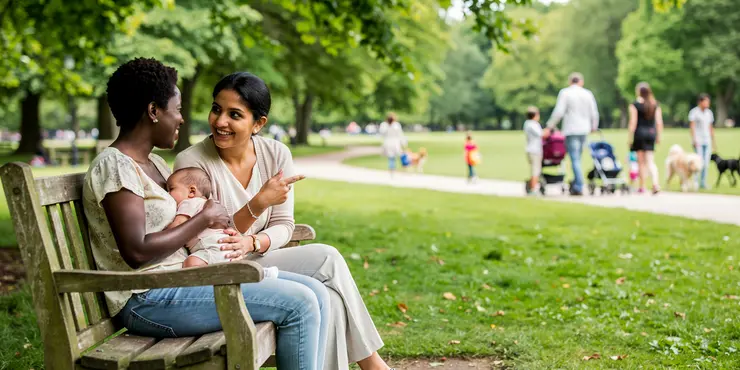
In the UK, breastfeeding in public is protected by law. Under the Equality Act 2010, it is illegal for anyone to ask a breastfeeding woman to leave a public place.
This legislation applies to a wide array of public settings, including cafes, shops, and public transportation.
The law aims to ensure that mothers feel comfortable breastfeeding whenever and wherever they wish.
Common Misconceptions
Despite the legal protection, some people are unaware that breastfeeding in public is a right. Misunderstandings may lead to uncomfortable situations for breastfeeding mothers.
Occasionally, establishments may mistakenly ask mothers to stop breastfeeding, unaware of the legal protections in place.
Education and awareness are key in dispelling these misconceptions and supporting breastfeeding mothers.
Social Attitudes Towards Public Breastfeeding
While legally protected, public breastfeeding can still evoke mixed social attitudes. Some people fully support it as a natural activity.
However, others may feel uncomfortable or hold conservative views, leading to potential conflict or disapproval.
Public campaigns and education efforts continue to promote acceptance and understanding of breastfeeding in public.
Support for Breastfeeding Mothers
Various organisations in the UK offer support to breastfeeding mothers. They provide resources and guidance to help navigate any challenges faced.
Support groups and online communities can provide advice and reassurance to mothers feeling apprehensive about breastfeeding publicly.
Healthcare professionals also encourage breastfeeding as a healthy, beneficial practice for both mother and child.
Conclusion
Breastfeeding in public is a legally protected right in the UK, though social attitudes may vary. Understanding and acceptance are crucial.
Education about the legalities and support available can empower mothers to breastfeed confidently in public settings.
Continuous efforts remain essential to ensure that all mothers feel comfortable and respected while breastfeeding publicly.
Frequently Asked Questions
Yes, breastfeeding in public is legal in most places around the world, and many countries have laws that specifically protect the right to breastfeed in public.
While most places support public breastfeeding, always check local regulations and cultural practices as there may be restrictions in certain areas or private establishments.
Yes, all 50 U.S. states, the District of Columbia, Puerto Rico, and the Virgin Islands have laws that specifically allow women to breastfeed in any public or private location.
No, in places where laws protect public breastfeeding, a business cannot ask a breastfeeding mother to leave or stop breastfeeding.
While there is no requirement to be discrete, many mothers choose to use covers or find a quiet corner for personal comfort and privacy.
Some countries may have cultural expectations or informal norms about modesty, but few have legal requirements mandating discretion.
Many public places like malls and airports provide feeding rooms, but they are not mandated everywhere. It's always a good idea to plan ahead if you prefer using such facilities.
If confronted, remain calm and confident, explain your legal rights if necessary, and consider seeking support from management or local advocacy groups.
Yes, many organizations promote public breastfeeding to normalize it and reduce stigma, often through campaigns and informational resources.
While laws generally protect breastfeeding, cultural attitudes can vary, especially for nursing toddlers and older children. Legally, women are protected to nurse as needed.
Yes, many organizations offer guides and resources about breastfeeding rights, such as La Leche League, local breastfeeding support groups, and government health websites.
While private properties can set general policies, they must still comply with local laws that protect a woman's right to breastfeed in public.
No, breastfeeding is not considered indecent exposure and is legally protected in many places, distinguishing it from laws that might apply to public nudity.
Yes, different cultures have varying levels of acceptance and attitudes towards public breastfeeding, and understanding local customs can be helpful.
Public breastfeeding normalizes this natural process, supports maternal and child health, and provides convenience and freedom for nursing mothers.
Cultural acceptance varies, but many societies are becoming more supportive of breastfeeding in public as awareness and advocacy increase.
Organizations like La Leche League, WHO, and UNICEF, as well as numerous local advocacy groups, support breastfeeding rights and awareness.
Some travel advisories and guides provide information on cultural norms and laws including breastfeeding practices, helpful for traveling mothers.
Yes, if a private home is used as a venue open to the public during events or business, breastfeeding protections often apply similarly to other public spaces.
Yes, social media policies on breastfeeding content can influence public perception and help normalize or stigmatize public breastfeeding practices.

Ergsy Search Results
This website offers general information and is not a substitute for professional advice.
Always seek guidance from qualified professionals.
If you have any medical concerns or need urgent help, contact a healthcare professional or emergency services immediately.
Some of this content was generated with AI assistance. We've done our best to keep it accurate, helpful, and human-friendly.
- Ergsy carefully checks the information in the videos we provide here.
- Videos shown by Youtube after a video has completed, have NOT been reviewed by ERGSY.
- To view, click the arrow in centre of video.
- Most of the videos you find here will have subtitles and/or closed captions available.
- You may need to turn these on, and choose your preferred language.
- Go to the video you'd like to watch.
- If closed captions (CC) are available, settings will be visible on the bottom right of the video player.
- To turn on Captions, click settings.
- To turn off Captions, click settings again.