
Speak To An Expert
Get clear, personalised advice for your situation.
Jot down a few questions to make the most of your conversation.
Understanding Acne and Its Impact
Acne is a common skin condition that affects many individuals in the UK. It can cause not only physical discomfort but also emotional distress.
People with acne often seek various treatments to improve their skin's appearance. The search for effective solutions sometimes leads to unconventional methods, such as the use of sunbeds.
What Are Sunbeds?
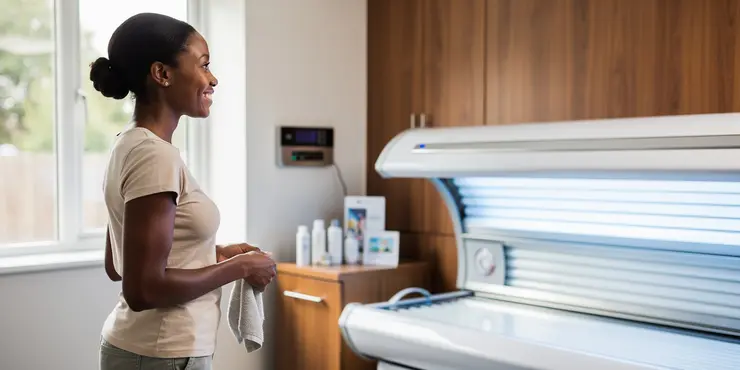
Sunbeds are devices that emit ultraviolet (UV) radiation to mimic the effects of natural sunlight. They are primarily used for tanning the skin.
While popular for achieving a bronzed look, sunbeds have also been considered for potential therapeutic benefits, including acne treatment.
Potential Benefits of Sunbeds for Acne
Some believe that UV radiation can help clear acne by reducing bacteria on the skin. The UV light may help to dry out acne lesions, potentially improving their appearance.
In certain cases, exposure to UV light can reduce inflammation, which is a key component of acne. This might lead to a temporary improvement in acne symptoms.
The Risks Involved
Despite potential benefits, there are significant risks associated with sunbed use. UV radiation exposure increases the risk of skin cancer, including melanoma.
Regular sunbed use can also accelerate skin aging, leading to premature wrinkles and skin damage. These factors should be considered thoroughly before using sunbeds for acne treatment.
Alternative Acne Treatments
There are safer and more effective treatments available for acne. Topical treatments and oral medications are commonly prescribed by dermatologists.
For some individuals, phototherapy using controlled light sources may offer benefits without the risks associated with sunbeds.
Conclusion
While sunbeds may offer temporary relief for some acne sufferers, the risks often outweigh the benefits. Consulting a healthcare professional is advisable.
Exploring alternative treatments with proven safety and efficacy could provide a better pathway to managing acne effectively.
Frequently Asked Questions
Some people believe that sunbeds can temporarily improve acne symptoms, but they are not a recommended treatment by healthcare professionals.
While moderate UV exposure can have antibacterial effects, the risks of sunbeds, such as skin damage and increased cancer risk, generally outweigh any potential benefits.
Sunbeds may reduce the appearance of acne temporarily by reducing inflammation and drying out the skin, but they do not treat the underlying causes of acne.
No, dermatologists typically do not recommend sunbeds due to the associated health risks such as skin cancer and premature aging.
Sunbeds can increase the risk of skin cancer, cause premature skin aging, and damage skin cells, outweighing any temporary benefits for acne.
No, sunbeds do not cure acne. They might temporarily reduce symptoms but do not address the underlying causes.
Sunbeds emit artificial UV light, which can be more intense than natural sunlight, increasing the risk of skin damage.
Yes, safer alternatives include topical treatments, oral medications, and lifestyle changes recommended by healthcare professionals.
The FDA does not approve the use of sunbeds for acne treatment due to the health risks involved.
UV light can have antibacterial effects and reduce inflammation, which might temporarily improve acne symptoms, but it's not a safe long-term solution.
The primary harm is an increased risk of skin cancer, including melanoma, which is why their use is discouraged.
Yes, repeated use of sunbeds can lead to permanent skin damage, including wrinkles, sun spots, and decreased skin elasticity.
There is no safe level of sunbed usage recommended for acne treatment because of the potential risks to the skin.
Treatments include over-the-counter products, prescription medications, laser therapy, and dietary changes under the guidance of a healthcare provider.
UV light can darken acne scars and make them more visible, potentially worsening their appearance over time.
No, teenagers should avoid sunbeds due to the heightened risk of long-term skin damage and the presence of safer treatment options.
Yes, excessive dryness from sunbeds can lead to increased oil production, potentially worsening acne.
Sunbeds are not medically approved for acne treatment due to their risks and lack of reliable evidence of effectiveness.
The majority of scientific evidence does not support the use of sunbeds for treating acne and highlights their risks instead.
Sunlight provides natural UV exposure, while sunbeds provide artificial, often stronger UV, with both posing risks but sunbeds being more hazardous.

Ergsy Search Results
This website offers general information and is not a substitute for professional advice.
Always seek guidance from qualified professionals.
If you have any medical concerns or need urgent help, contact a healthcare professional or emergency services immediately.
Some of this content was generated with AI assistance. We've done our best to keep it accurate, helpful, and human-friendly.
- Ergsy carefully checks the information in the videos we provide here.
- Videos shown by Youtube after a video has completed, have NOT been reviewed by ERGSY.
- To view, click the arrow in centre of video.
- Most of the videos you find here will have subtitles and/or closed captions available.
- You may need to turn these on, and choose your preferred language.
- Go to the video you'd like to watch.
- If closed captions (CC) are available, settings will be visible on the bottom right of the video player.
- To turn on Captions, click settings.
- To turn off Captions, click settings again.