
Get Answers
Introduction to Indefinite Prison Sentences
Indefinite prison sentences in the UK are a controversial topic. These sentences, such as life imprisonment, do not have a fixed release date.
Critics argue that they can be excessively punitive and do not always serve justice effectively. There is growing interest in exploring alternatives that could better rehabilitate offenders.
Probation and Community Service
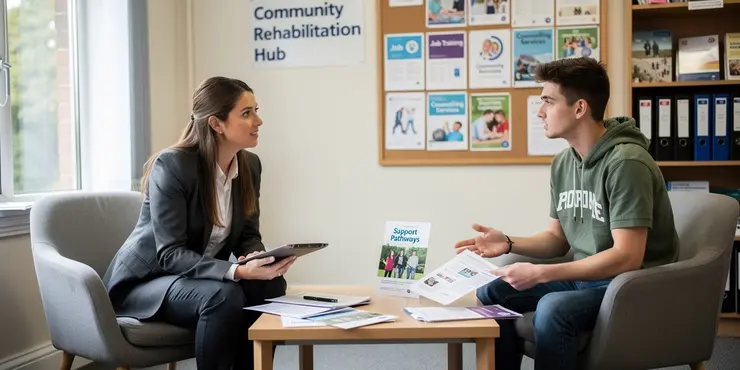
Probation is a commonly suggested alternative to indefinite sentences. It allows offenders to remain in the community under supervision rather than being incarcerated.
This approach can include requirements such as attending rehabilitation programs and regular meetings with probation officers. Community service can also be integrated as a requirement, enabling offenders to give back to society.
Rehabilitation Programs
Rehabilitation programs focus on addressing the root causes of criminal behavior. These programs can include drug treatment, mental health support, and educational opportunities.
By focusing on rehabilitation, offenders are given tools and support to reintegrate into society successfully. This approach can potentially reduce recidivism rates more effectively than indefinite sentences.
Restorative Justice
Restorative justice seeks to repair the harm caused by crime through reconciliation with victims and the community. Offenders participate in dialogue sessions with victims to understand the impact of their actions.
This method promotes accountability and empathy and often leads to meaningful restitution. In some cases, restorative justice can provide healing that traditional sentencing cannot offer.
Electronic Monitoring
Electronic monitoring, such as tagging, can serve as an alternative to indefinite detention. This approach allows offenders to remain in their communities while being closely monitored.
Tags can track movement and ensure compliance with curfews or geographical restrictions. It provides a cost-effective and flexible way to manage offender behavior outside of prisons.
Conclusion: A Multi-Faceted Approach
Finding alternatives to indefinite sentences requires a multi-faceted approach. Effective strategies often involve combining several alternatives, tailored to the individual offender's needs.
By focusing on rehabilitation and integration, these alternatives can offer more humane and effective justice solutions. This can ultimately contribute to a safer and more compassionate society.
Frequently Asked Questions
An indefinite prison sentence is a type of sentence where the exact duration is not specified, often dependent on reviews and assessments of the prisoner's behavior and rehabilitation.
Alternatives are considered to address concerns about fairness, rehabilitation, cost, overcrowding, and the social reintegration of offenders.
Alternatives include fixed-term sentences, suspended sentences, probation, restorative justice programs, community service, and rehabilitation programs.
Probation allows offenders to remain in the community under supervision with conditions instead of serving time in prison, with the goal of rehabilitation and reducing recidivism.
Restorative justice is an approach that focuses on repairing harm caused by criminal behavior through reconciliation between victims and offenders, often involving mediated meetings and restitution.
Yes, community service can be an effective alternative by having offenders contribute positively to society, which can aid in rehabilitation and reduce incarceration costs.
Rehabilitation programs aim to address underlying issues such as substance abuse or mental health problems, helping offenders reintegrate into society and reducing the likelihood of reoffending.
Yes, fixed-term sentences provide a clear release date and can be combined with plans for reintegration, offering more predictability for offenders and their families.
Electronic monitoring allows offenders to serve sentences under house arrest with GPS tracking to ensure compliance, which can reduce prison populations and maintain public safety.
Suspended sentences delay serving time in prison on the condition that the offender meets certain requirements, like good behavior, during a specified period.
Parole allows offenders to be released early under supervision, with the aim of transitioning back into society while providing oversight to reduce the risk of reoffending.
Yes, alternatives that focus on rehabilitation and reintegration, such as probation and training programs, have been shown to reduce recidivism by addressing the root causes of criminal behavior.
Benefits include cost savings, reduced overcrowding in prisons, better outcomes for offenders and victims, and more efficient use of the criminal justice system's resources.
Challenges include ensuring public safety, providing adequate resources for monitoring and support, and addressing public perceptions and attitudes towards non-incarceration penalties.
By facilitating a process where victims and offenders engage in dialogue and agree on restitution, this form of mediation can provide closure and help prevent future offenses.
Boot camps emphasize discipline, physical activity, and education, offering a structured environment for young offenders as an alternative to incarceration; however, they have mixed success rates.
Drug courts offer treatment plans and supervision for offenders with substance abuse issues, focusing on rehabilitation rather than punishment to reduce drug-related crimes.
These panels involve community members in deciding non-custodial sentences for offenders, promoting community engagement, accountability, and restoration.
Yes, options such as diversion programs, counseling, education initiatives, and mentorship aim to guide juveniles away from crime and foster positive development.
Mental health courts provide treatment plans for offenders with mental health issues, aiming to address the root causes of their behavior and reduce reoffending.

Ergsy Search Results
This website offers general information and is not a substitute for professional advice.
Always seek guidance from qualified professionals.
If you have any medical concerns or need urgent help, contact a healthcare professional or emergency services immediately.
Some of this content was generated with AI assistance. We've done our best to keep it accurate, helpful, and human-friendly.
- Ergsy carefully checks the information in the videos we provide here.
- Videos shown by Youtube after a video has completed, have NOT been reviewed by ERGSY.
- To view, click the arrow in centre of video.
- Most of the videos you find here will have subtitles and/or closed captions available.
- You may need to turn these on, and choose your preferred language.
- Go to the video you'd like to watch.
- If closed captions (CC) are available, settings will be visible on the bottom right of the video player.
- To turn on Captions, click settings.
- To turn off Captions, click settings again.