
Get Answers
Introduction
In recent years, self-testing kits and online tools have gained popularity in the UK as convenient options for monitoring health at home. Among these are self-administered eye tests, which offer a quick and easy way to check one's vision. However, many people wonder whether these tools can serve as a substitute for professional eye examinations.
What Are Self-Tests for Eye Health?
Self-tests for eye health can take various forms, including online vision tests, downloadable apps, and at-home testing kits. These tools typically assess elements such as visual acuity, colour perception, and astigmatism. They provide results that might indicate whether further professional evaluation is needed. Some digital platforms even offer preliminary guidance on whether corrective lenses might be required.
Limitations of Self-Tests
While self-tests can be useful for basic screening, they come with significant limitations. Firstly, they lack the comprehensive nature of professional eye exams provided by qualified optometrists or ophthalmologists. Self-tests cannot detect underlying conditions such as glaucoma, cataracts, or retinal disorders. Secondly, the accuracy of these tests is often dependent on factors such as screen size and ambient lighting, which can affect the results.
Moreover, self-tests do not account for personal medical history, potentially overlooking crucial risk factors. They might also provide a false sense of security, leading individuals to delay seeking professional care when it's actually needed.
The Role of Professional Eye Exams
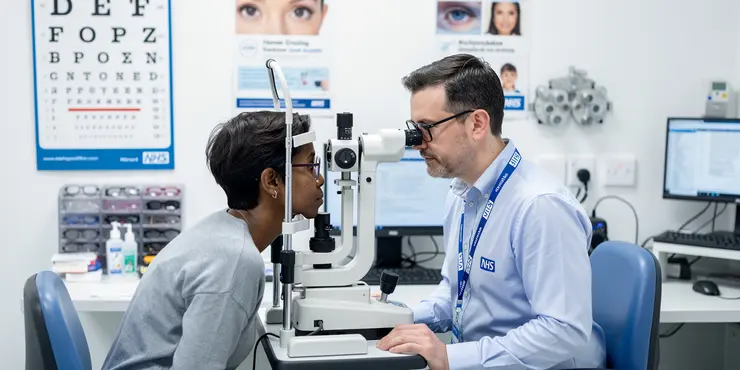
Professional eye exams in the UK are thorough assessments conducted by health care professionals. During an eye exam, optometrists evaluate not only visual acuity but also the overall health of the eyes. They use specialized equipment to detect signs of eye diseases and other health issues that might manifest symptoms through the eyes, such as diabetes and hypertension.
Regular eye exams can be crucial for early detection of potential health issues. For individuals with existing conditions, eye care professionals provide personalized management plans and monitor any changes over time. In addition, optometrists offer expert advice on eye care and tailored recommendations for vision correction if necessary.
Conclusion
While self-tests for eyes can serve as a convenient and preliminary tool for individuals curious about their vision, they should not be substituted for professional eye exams. The limitations in scope and accuracy mean they lack the comprehensive evaluations necessary to protect one's eye health fully. Regular visits to an eye care professional remain essential for maintaining optimal eye health and catching potential issues early on. In the UK, professional eye care is widely accessible, with many people eligible for NHS sight tests, ensuring that everyone can benefit from regular, professional eye health assessments.
Introduction
Lately, many people in the UK are using self-testing kits and online tools to check their health at home. One of these is the eye test you do by yourself. It is a quick way to check your eyes. But people often wonder if these tests are as good as seeing an eye doctor.
What Are Self-Tests for Eye Health?
Self-tests for eye health can be found online or as mobile apps, and sometimes as kits you use at home. They check things like how well you see, if you can tell different colours apart, and if you have any vision issues like astigmatism. These tests can tell you if you need to see an eye doctor. Some online tools might suggest if you need glasses.
Limitations of Self-Tests
Self-tests are good for a quick check, but they have limits. They are not as complete as the checks done by an eye doctor. Self-tests cannot find problems like glaucoma, cataracts, or other serious eye issues. These tests might not work well if your screen is small or the light is too dim.
Self-tests also do not know your medical history, so they might miss important health risks. They can make people feel they don't need to see a doctor when they actually do.
The Role of Professional Eye Exams
Seeing an eye doctor in the UK means getting a full check-up by a health expert. Doctors check how well you can see and the health of your eyes. They use special tools to find eye diseases or health problems like diabetes that can affect your eyes.
Regular eye exams help find health problems early. If you have a health condition, eye doctors can make a special plan and keep an eye on changes over time. They give expert advice and suggest vision correction if you need it.
Conclusion
Doing a self-test for your eyes can be quick and helpful, but it should not replace a visit to the eye doctor. Self-tests are not as accurate and thorough as professional eye exams. Visiting an eye doctor regularly is important to keep your eyes healthy and catch problems early. In the UK, most people can get their eyes checked by the NHS, making sure everyone can have professional eye health care.
Frequently Asked Questions
No, self-tests are not a substitute for professional eye exams. They can provide a preliminary assessment but lack the thoroughness of an examination by an eye care professional.
Self-tests cannot detect serious eye conditions, eye health issues, or prescribe corrective lenses accurately, which require professional diagnostic tools and expertise.
No, self-tests cannot detect eye diseases like glaucoma, cataracts, or retinal problems. Only an eye doctor can diagnose these with specialized equipment.
Self-tests can help you get an idea of your vision clarity or screen for basic vision problems, such as refractive errors, but they are not comprehensive.
A professional eye exam assesses overall eye health, detects diseases, and provides accurate prescriptions with specialized equipment and expertise.
Adults should have a comprehensive eye exam at least every two years, or annually if you have specific eye problems or risk factors.
No, self-tests cannot provide a prescription for glasses. Only an optometrist or ophthalmologist can provide an accurate prescription based on a full exam.
While some self-test apps may offer rudimentary assessments, they cannot replace the detailed diagnostics provided by a professional eye exam.
Self-tests may identify basic problems like nearsightedness, farsightedness, or astigmatism but should not be relied on for a comprehensive assessment.
No, self-tests do not check for eye health conditions. They focus on vision acuity and need a professional examination for health assessments.
No, a lack of symptoms does not mean there are no underlying conditions. Regular professional eye exams are important for early detection of issues.
Yes, delaying professional eye exams can result in late diagnosis of treatable conditions, which could lead to permanent vision problems or complications.
Professionals use equipment like retinal cameras, slit lamps, and tonometers which are critical for comprehensive eye health evaluations.
Self-tests can offer some insight into vision changes, but professional exams are necessary to understand the cause and extent of these changes.
No, children's eye health requires professional assessments to identify issues early, which self-tests cannot adequately provide.
Insurance plans typically do not cover self-tests. They cover professional eye exams as these are considered medically necessary assessments.
If a self-test indicates a problem, schedule a professional eye exam to receive a full assessment and accurate diagnosis.
Online vision tests can provide some information but are not as accurate or comprehensive as an in-person exam conducted by a professional.
Self-tests assess vision clarity through charts and distance-reading tasks but lack the capability to assess overall eye health and other conditions.
Optometrists and ophthalmologists provide comprehensive eye care, including examinations, disease detection, and management of eye health.
No, self-tests cannot replace going to an eye doctor. They can help you check your eyes a little bit, but they are not as careful as a real eye exam by an eye doctor.
Self-tests can’t find serious eye problems or tell how healthy your eyes are. They also can't give you the right glasses. You need a trained eye doctor for that.
No, you can't find eye problems like glaucoma, cataracts, or retinal issues by yourself. Only an eye doctor can do that with special tools.
Self-tests can help you check how clear your vision is or spot simple eye problems, like if you need glasses. But they don't check everything.
An eye check-up by an eye doctor looks at your eyes to see if they are healthy. It can find eye problems and help give you the right glasses. The doctor uses special tools to do this.
Grown-ups should get their eyes checked by a doctor every two years. If you have eye problems or worry about your eyes, you should go every year.
Here are some ways to help you remember eye check-ups:
- Set a reminder on your phone or calendar.
- Ask a friend or family member to remind you.
- Keep a note on your fridge or somewhere you see every day.
No, at-home tests can't give you glasses. You need to see an eye doctor to get the right glasses. The eye doctor checks your eyes and tells you what you need.
Some apps can give you a basic eye test. But these apps are not as good as seeing a real eye doctor. A real eye doctor can check your eyes properly.
Self-tests can help you find out if you have simple eye problems like seeing things blurry up close, far away, or if your eyes are shaped differently. But, they can't check everything about your eyes.
No, self-tests do not check if your eyes are healthy. These tests look at how well you can see. You need to visit an eye doctor to check the health of your eyes.
Tip: Use a calendar to remember when to see your eye doctor. You can set reminders on your phone too!
Just because you feel okay, it doesn’t mean nothing is wrong. Going to the eye doctor is important to find problems early.
Yes, waiting too long to have an eye check-up can be bad. You might not find eye problems early enough. This could cause long-term eye troubles or make things worse.
Eye doctors use special tools to check your eyes. They use cameras to look inside your eyes. They use lamps to see your eyes better. They also use a tool to check the pressure in your eyes. These tools help them make sure your eyes are healthy.
Self-tests can help you see if your vision is changing. But, only a doctor can find out why and how much your vision has changed.
No, you should see an eye doctor to check children's eyes. They can find problems early. Tests you do at home are not good enough.
Insurance usually does not pay for tests you do yourself. They do pay for eye tests done by a doctor because these are important to check your health.
If your eye test shows something is wrong, make an appointment with an eye doctor. They can check your eyes and tell you what's going on.
Online eye tests can help a bit, but they are not as good as seeing a real eye doctor in person.
Eye tests you do at home help check how well you can see using charts and reading at different distances. But these tests cannot check if your eyes are healthy or find other eye problems.
Eye doctors help you see better and make sure your eyes are healthy. They check your eyes, find any problems, and help take care of your eye health.

Ergsy Search Results
This website offers general information and is not a substitute for professional advice.
Always seek guidance from qualified professionals.
If you have any medical concerns or need urgent help, contact a healthcare professional or emergency services immediately.
Some of this content was generated with AI assistance. We've done our best to keep it accurate, helpful, and human-friendly.
- Ergsy carefully checks the information in the videos we provide here.
- Videos shown by Youtube after a video has completed, have NOT been reviewed by ERGSY.
- To view, click the arrow in centre of video.
- Most of the videos you find here will have subtitles and/or closed captions available.
- You may need to turn these on, and choose your preferred language.
- Go to the video you'd like to watch.
- If closed captions (CC) are available, settings will be visible on the bottom right of the video player.
- To turn on Captions, click settings.
- To turn off Captions, click settings again.