
Get Answers
Introduction to School Meal Inspections
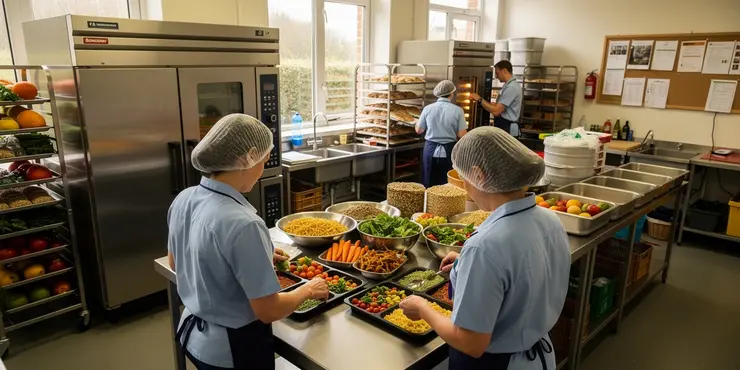
In the UK, the quality and standards of school meals are subject to inspections and regulations to ensure they meet health and nutritional guidelines. These inspections play a crucial role in safeguarding the wellbeing of students by promoting healthy eating habits and providing balanced nutrition.
Nutritional Standards
School meals must comply with the School Food Standards, which are mandatory for all maintained schools, academies, and free schools. These standards are designed to ensure that children receive a balanced diet, with requirements on the inclusion of fruits, vegetables, protein, dairy, and whole grains, while limiting the intake of fat, sugar, and salt. The aim is to combat issues such as obesity, malnutrition, and to foster a healthy lifestyle from a young age.
Inspection Framework
The inspections of school meals are primarily conducted by Ofsted, the Office for Standards in Education, Children’s Services and Skills. While Ofsted assessments focus on the teaching environment, they also encompass aspects related to student welfare, including the quality of food provided. Additionally, local authorities often conduct their inspections or work with Health and Safety executives to ensure compliance with safety and hygiene standards.
Role of Local Authorities and Public Health
Local authorities have a significant responsibility in monitoring school food services. They collaborate with caterers and school administration to offer guidance on meeting nutritional standards and often conduct audits to assess adherence. Public Health England supports schools by providing guidelines and resources to improve meal quality and promote healthy eating among students. These efforts are part of a broader initiative to enhance public health through dietary interventions.
Importance of Quality Inspections
Quality inspections of school meals are crucial for a few reasons. They ensure that the food provided is safe and hygienic, meeting the necessary dietary requirements. Regular checks help identify any shortcomings in service provision and maintain high standards of food preparation and delivery. Furthermore, these inspections often include feedback mechanisms which allow students and parents to voice concerns or suggestions about the meal services.
Challenges and Considerations
Despite the structured framework for inspections, there are challenges in consistently maintaining high standards across all schools. Budget constraints, varying levels of commitment from local management, and differences in catering provisions can impact the quality of meals. It is important for stakeholders at all levels, from government to local authorities and school administrations, to work collaboratively to overcome these challenges.
Conclusion
The inspection and regulation of school meals in the UK are vital processes aimed at safeguarding student health through nutritious and quality meals. By adhering to established standards and conducting regular inspections, schools help promote a positive learning environment and foster lifelong healthy eating habits among students. Continued efforts and cooperation among educational and health authorities remain essential in ensuring the success and improvement of school meal provisions.
Introduction to School Meal Inspections
In the UK, school meals are checked to make sure they are healthy and good for students. These checks help students eat healthy food that is good for their bodies.
Nutritional Standards
School meals must follow certain rules to make sure kids eat a balanced diet. This means having fruits, vegetables, protein, dairy, and whole grains in their meals. Schools try not to give lots of fat, sugar, or salt. These rules help keep kids healthy and strong.
Inspection Framework
Ofsted, the group that checks schools, also looks at the food to make sure it is good for the students. Local councils also do checks or work with Health and Safety teams to make sure the food is safe and clean.
Role of Local Authorities and Public Health
Local councils help schools provide good meals. They work with people who make the food to give advice and do checks. Public Health England gives schools tips and resources to help with good meal planning. Together, these groups work to keep students healthy.
Importance of Quality Inspections
Checking school meals is important. It makes sure the food is safe, healthy, and meets dietary needs. These checks also help find and fix any problems. Students and parents can share their thoughts and suggestions to improve meal services.
Challenges and Considerations
Keeping high food standards in all schools can be hard. Money limits, different levels of support, and different food services can affect meal quality. Everyone involved, like the government, local councils, and schools, needs to work together to solve these problems.
Conclusion
Checking and setting rules for school meals is important for keeping students healthy in the UK. By following rules and checking regularly, schools can help students learn well and develop healthy eating habits for life. Working together with health and education groups is key to making school meals the best they can be.
Frequently Asked Questions
Yes, school meals are regularly inspected to ensure they meet quality and nutritional standards set by governing bodies.
School meals are usually inspected by local health departments, school nutrition professionals, and food service authorities.
School meals must meet standards set by federal, state, and local authorities, including nutritional content, safety, and hygiene requirements.
The frequency of inspections can vary, but typically, school meals are inspected several times throughout the school year.
If a school meal program does not meet standards, corrective actions are usually required, and the school may face penalties or additional inspections.
Yes, there are specific nutritional guidelines, like those established by the USDA's National School Lunch Program, which emphasize balanced and healthy meal options.
Yes, schools inspect the ingredients used in meals to ensure they are fresh, safe, and meet nutritional guidelines.
Many schools have systems in place for students to provide feedback on school meal quality, which can be used to improve offerings.
Dieticians often help design and evaluate meal plans to ensure they meet nutritional standards and are balanced.
Yes, food safety is a critical component of school meal inspections, ensuring that food is stored, prepared, and served safely.
Parents might be involved through advisory panels or committees designed to oversee and provide feedback on school meal programs.
Yes, schools may face sanctions such as funding withdrawal or the need for additional inspections if they fail to comply with standards.
Schools might consider cultural preferences and dietary restrictions when planning and inspecting meals, often consulting community members.
Yes, managing allergens is a critical part of school meal inspections to ensure student safety.
While federal guidelines exist, states may have their own additional standards and inspection processes.
Schools use feedback from inspections to improve meal quality, enhance nutritional content, and address any deficiencies.
Yes, based on inspection findings, schools may alter their menus to better align with standards and feedback.
Inspectors may review production records, inventory logs, and health inspection reports during an inspection.
New meal programs may undergo initial evaluations and more frequent inspections to ensure they start on the right track.
Schools may use newsletters, meetings, or websites to communicate the quality and standards of school meals to parents and the broader community.
Yes, people check school meals often to make sure they are good and healthy. They have to meet the rules set by important organizations.
People check school meals to make sure they are safe and healthy. These people are from local health groups, school food experts, and food service teams.
School lunches must follow rules. These rules come from the government and local areas. The rules make sure the food is healthy, safe, and clean.
Schools check the food in the lunch room many times each year.
If a school lunch program is not good enough, they have to make it better. The school might get in trouble and have more people check their lunches.
Yes, there are rules about what foods are healthy. These rules help people make healthy meals, like the ones in the USDA's School Lunch Program.
Yes, schools check the food ingredients. They make sure the ingredients are fresh, safe, and healthy for students.
A lot of schools have ways for kids to say what they think about the school lunches. This helps make the food better.
Dieticians are people who know a lot about healthy eating. They help make meal plans that are good for your body and keep you healthy.
Yes, food safety is very important in schools. It makes sure that food is kept, cooked, and given out safely.
Parents can help by joining groups that give advice about school meals. These groups talk about the food and give ideas to make it better.
Yes, schools can get into trouble if they don't follow the rules. They might lose money or have more checks to see if they are doing okay.
If you find this hard to read, try using tools like text-to-speech, which can read the words out loud for you. You can also ask someone you trust to help explain it to you.
Schools think about what different cultures like to eat and special food needs when planning meals. They often ask people in the community for their ideas.
Yes, taking care of things that cause allergies is very important when checking school meals. This keeps students safe.
The government has rules for safety. But each state can have its own rules, too.
Schools listen to what inspections say. They use this to make meals better, healthier, and fix any problems.
Yes, after checking the food, schools might change their menus to make them better and follow the rules.
Inspectors look at important papers.
They check how things are made, what's in stock, and health reports.
New food programs might be checked at the start. They will be looked at more often to make sure they are doing well.
Schools can tell parents about school meals using newsletters, meetings, or websites. This way, everyone knows how good the food is at school.
If you need help understanding, you can:
- Ask someone to read it with you.
- Use a reading app to read it out loud.

Ergsy Search Results
This website offers general information and is not a substitute for professional advice.
Always seek guidance from qualified professionals.
If you have any medical concerns or need urgent help, contact a healthcare professional or emergency services immediately.
Some of this content was generated with AI assistance. We've done our best to keep it accurate, helpful, and human-friendly.
- Ergsy carefully checks the information in the videos we provide here.
- Videos shown by Youtube after a video has completed, have NOT been reviewed by ERGSY.
- To view, click the arrow in centre of video.
- Most of the videos you find here will have subtitles and/or closed captions available.
- You may need to turn these on, and choose your preferred language.
- Go to the video you'd like to watch.
- If closed captions (CC) are available, settings will be visible on the bottom right of the video player.
- To turn on Captions, click settings.
- To turn off Captions, click settings again.