
Get Answers
What Is an Air Source Heat Pump?
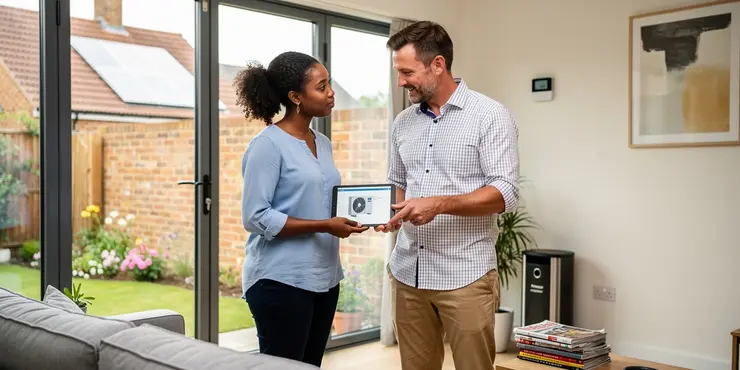
An air source heat pump is a low-carbon heating system that takes heat from the outside air and uses it to warm your home. It works a bit like a fridge in reverse, moving heat rather than creating it by burning fuel.
Even when the air feels cold, there is still usable heat energy outside. The pump absorbs that energy, increases the temperature, and sends it into your home through radiators, underfloor heating, or a hot water cylinder.
How Does It Work?
The system uses a refrigerant and a compressor to capture and boost heat. An outdoor unit extracts warmth from the air, and an indoor unit transfers that heat into your heating and hot water system.
There are two main types: air-to-water and air-to-air. In UK homes, air-to-water systems are more common because they can connect to radiators and provide hot water as well as space heating.
Benefits for Homeowners
One of the biggest advantages is lower carbon emissions compared with gas or oil boilers. This makes air source heat pumps a strong choice for households looking to reduce their environmental impact.
They can also offer steady, efficient heating throughout the day. While installation can be expensive, running costs may be lower over time, especially in well-insulated homes using the right electricity tariff.
Is Your Home Suitable?
Air source heat pumps work best in homes that are well insulated. Loft insulation, cavity wall insulation, and good-quality double glazing can all help the system perform efficiently.
Your current heating setup matters too. Homes with larger radiators or underfloor heating often suit heat pumps better because they work at lower temperatures than traditional boilers.
Costs and Government Support
Installation costs vary depending on the size of the property and the work needed to adapt the heating system. It is worth getting a survey before making a decision, as some homes need extra upgrades.
UK homeowners may be able to get support through government schemes such as the Boiler Upgrade Scheme. These grants can help reduce the upfront cost and make the switch more affordable.
Maintenance and Everyday Use
Air source heat pumps need less routine maintenance than many people expect. An annual service is usually enough to check performance, refrigerant levels, and general condition.
To get the best results, it helps to use the system consistently rather than turning it on and off often. A heat pump works most efficiently when it maintains a steady indoor temperature.
Should You Make the Switch?
An air source heat pump can be a smart long-term investment for many UK households. It is especially appealing if you want a cleaner heating option and your home is already reasonably energy efficient.
Before deciding, compare installation costs, likely savings, and your home’s suitability. A professional assessment will help you understand whether a heat pump is the right fit for your property.
What Is an Air Source Heat Pump?
An air source heat pump is a heating system. It takes heat from the air outside. It uses that heat to warm your home.
It works a bit like a fridge in reverse. It moves heat. It does not make heat by burning fuel.
How Does It Work?
Even cold air has some heat in it. The pump takes this heat from the air.
It uses a liquid called a refrigerant. It also uses a compressor. These help collect the heat and make it hotter.
Then the heat goes into your home. It can go through radiators, underfloor heating, or a hot water tank.
There are two main types. One type is air-to-water. The other type is air-to-air.
In UK homes, air-to-water systems are more common. They can heat water and warm rooms.
Benefits for Homeowners
Air source heat pumps give off less carbon than gas or oil boilers. This is better for the environment.
They can give steady heat all day. They can also be efficient.
They can cost a lot to install. But they may cost less to run over time.
They often work best in homes that keep heat in well.
Is Your Home Suitable?
These heat pumps work best in homes with good insulation. Loft insulation can help. Wall insulation can help too.
Good windows can also help. Double glazing is useful.
Your heating system matters as well. Bigger radiators or underfloor heating often work well with heat pumps.
This is because heat pumps use lower temperatures than normal boilers.
Costs and Government Support
The cost of fitting a heat pump can change. It depends on your home and the work needed.
Some homes need extra changes first. It is a good idea to get a survey before you decide.
UK homeowners may get help from government schemes. One example is the Boiler Upgrade Scheme.
These grants can lower the first cost. This can make the change easier.
Maintenance and Everyday Use
Air source heat pumps do not need much upkeep. One service each year is often enough.
A service checks how well it works. It also checks the refrigerant and the system condition.
It helps to use the heat pump steadily. Do not keep turning it on and off.
It works best when your home stays at the same warm temperature.
Should You Make the Switch?
An air source heat pump can be a good choice for many homes in the UK. It may be a smart long-term investment.
It is a good option if you want cleaner heating. It is also better if your home uses energy well.
Before you decide, look at the cost. Think about savings too. Check if your home is suitable.
A professional can help you decide if it is right for your home.
Frequently Asked Questions
Air source heat pumps for homeowners are heating and cooling systems that move heat between the outside air and a home. In winter, they extract heat from outdoor air and transfer it indoors; in summer, many models can reverse the process to provide cooling.
Air source heat pumps for homeowners can work in many homes, including houses and some apartments, but suitability depends on insulation, available outdoor space, existing heating system, and local climate. A home energy assessment helps determine whether they are a good fit.
Air source heat pumps for homeowners are often more efficient than gas boilers because they move heat rather than generate it by burning fuel. Their real-world efficiency depends on outdoor temperatures, system design, and the temperature required by the home’s radiators or underfloor heating.
Yes, Air source heat pumps for homeowners can still operate in cold weather, though performance typically drops as outdoor temperatures fall. Modern units are designed to work in low temperatures, and proper sizing and insulation help maintain comfort in winter.
The installation cost of Air source heat pumps for homeowners varies widely based on system size, property layout, upgrades to radiators or insulation, and local labor rates. Many homeowners should expect a higher upfront cost than for a standard boiler replacement.
Running costs for Air source heat pumps for homeowners depend on electricity prices, the system’s efficiency, the home’s insulation, and household heating demand. Well-insulated homes with correctly designed systems generally achieve lower operating costs than inefficient setups.
In many locations, Air source heat pumps for homeowners may fall under permitted development rules, but requirements vary by country, region, and property type. Homeowners should check local regulations and any restrictions for listed buildings or conservation areas.
Air source heat pumps for homeowners typically last around 15 to 20 years, and sometimes longer with good maintenance and proper installation. Longevity depends on usage patterns, servicing, and the quality of the equipment.
Air source heat pumps for homeowners need regular maintenance such as checking filters, clearing debris from the outdoor unit, and having periodic professional servicing. Routine care helps maintain efficiency and reduce the risk of breakdowns.
Yes, many Air source heat pumps for homeowners can provide both heating and cooling if they are reversible models. Whether cooling is available depends on the specific system and how the indoor distribution equipment is configured.
Air source heat pumps for homeowners can sometimes work with existing radiators, but the radiators may need to be larger or better matched to lower water temperatures. A heating engineer can assess whether upgrades are needed for comfortable performance.
Air source heat pumps for homeowners produce some outdoor noise from the fan and compressor, but modern systems are generally designed to be relatively quiet. Placement, installation quality, and distance from neighbors can affect perceived noise levels.
Better loft insulation, wall insulation, draught proofing, and efficient windows can improve the performance of Air source heat pumps for homeowners. A more airtight and well-insulated home requires less heat, allowing the system to operate more efficiently.
Many Air source heat pumps for homeowners use a hot water cylinder to store domestic hot water because heat pumps work most efficiently when they heat water gradually. Some systems can be designed differently, but a cylinder is common in retrofit installations.
Air source heat pumps for homeowners usually cost less to install than ground source heat pumps and are easier to fit because they do not require ground loops or extensive excavation. Ground source systems can be more efficient in some cases, but they are typically more disruptive and expensive upfront.
Grants and incentives for Air source heat pumps for homeowners vary by government and region, and they can change over time. Homeowners should check current national and local programs, utility rebates, and eligibility requirements before purchasing.
Yes, Air source heat pumps for homeowners can be installed in older properties, but the home may need insulation improvements, radiator upgrades, or careful system design. Older homes often benefit from a whole-house assessment before installation.
The correct size for Air source heat pumps for homeowners depends on the property’s heat loss, insulation level, floor area, and hot water demand. Proper sizing is important because an undersized system may struggle, while an oversized one may run less efficiently.
Homeowners should choose an installer for Air source heat pumps for homeowners with proven experience, relevant certifications, strong references, and detailed design and aftercare support. A good installer will assess the home, explain expected performance, and provide a clear quotation.
The main benefits of Air source heat pumps for homeowners include lower carbon emissions than fossil fuel heating, potential energy efficiency gains, and the ability to provide reliable heating and sometimes cooling. They can also improve long-term energy resilience when paired with a well-insulated home.
Air source heat pumps for homeowners are systems that heat and cool a home. They move heat from the air outside into the home. In summer, many can do the opposite and cool the home.
Air source heat pumps for homeowners can work in many homes. This includes houses and some flats. But they need enough insulation, outdoor space, and the right heating system. A home check can help you know if one will work well.
Air source heat pumps for homeowners are often more efficient than gas boilers. They move heat instead of making heat by burning fuel. How well they work can depend on the weather, the system design, and the home’s heating setup.
Yes, Air source heat pumps for homeowners can still work in cold weather. They may work less well when it is very cold outside. New models are made for cold weather, and good insulation helps keep the home warm.
The cost of Air source heat pumps for homeowners can change a lot. It depends on the size of the system, the home layout, extra work needed, and local labour costs. The first cost is often higher than fitting a standard boiler.
Running costs for Air source heat pumps for homeowners depend on electricity prices, system efficiency, insulation, and how much heat the home needs. A well-insulated home with the right system often costs less to run.
In many places, Air source heat pumps for homeowners do not need planning permission. They may be covered by local rules. But the rules are not the same everywhere. Special rules may also apply to listed buildings or protected areas.
Air source heat pumps for homeowners often last about 15 to 20 years. Some last longer with good care and correct fitting. How long they last depends on how much they are used and how well they are serviced.
Air source heat pumps for homeowners need simple regular care. You should check the filters and keep leaves and dirt away from the outdoor unit. A professional service is also important from time to time.
Yes, many Air source heat pumps for homeowners can heat and cool a home. This depends on the model. The inside parts of the system must also be set up for cooling.
Air source heat pumps for homeowners can sometimes work with old radiators. But the radiators may need to be bigger or better matched to the system. A heating engineer can check this for you.
Air source heat pumps for homeowners make some noise outside. This comes from the fan and compressor. New systems are usually quite quiet. Where the unit is placed can change how noisy it seems.
Better loft insulation, wall insulation, draught proofing, and good windows can help Air source heat pumps for homeowners work better. A warmer, less leaky home needs less heat, so the system can run more easily.
Many Air source heat pumps for homeowners use a hot water cylinder. This stores hot water for the home. Heat pumps often work best when they heat water slowly. Some systems are different, but a cylinder is common.
Air source heat pumps for homeowners usually cost less to fit than ground source heat pumps. They are also easier to install because they do not need deep digging. Ground source systems can work very well, but they cost more and take more work to install.
Grants and other help for Air source heat pumps for homeowners are different in each place. They can also change over time. Homeowners should check the latest local and national schemes before buying one.
Yes, Air source heat pumps for homeowners can be fitted in older homes. But the home may need better insulation, new radiators, or a careful system design. A full home check is often helpful first.
The right size for Air source heat pumps for homeowners depends on the home’s heat loss, insulation, floor area, and hot water needs. Size matters a lot. A system that is too small may not keep up. One that is too big may not work as well.
Homeowners should choose an installer for Air source heat pumps for homeowners with good experience and the right certificates. They should also have good references and offer help after the job. A good installer will check the home and give a clear quote.
The main benefits of Air source heat pumps for homeowners are lower carbon pollution, better energy use, and reliable heating. Some systems can also cool the home. They can work even better in a home that is well insulated.

Ergsy Search Results
This website offers general information and is not a substitute for professional advice.
Always seek guidance from qualified professionals.
If you have any medical concerns or need urgent help, contact a healthcare professional or emergency services immediately.
Some of this content was generated with AI assistance. We've done our best to keep it accurate, helpful, and human-friendly.
- Ergsy carefully checks the information in the videos we provide here.
- Videos shown by Youtube after a video has completed, have NOT been reviewed by ERGSY.
- To view, click the arrow in centre of video.
- Most of the videos you find here will have subtitles and/or closed captions available.
- You may need to turn these on, and choose your preferred language.
- Go to the video you'd like to watch.
- If closed captions (CC) are available, settings will be visible on the bottom right of the video player.
- To turn on Captions, click settings.
- To turn off Captions, click settings again.