
Get Answers
Understanding the council’s role
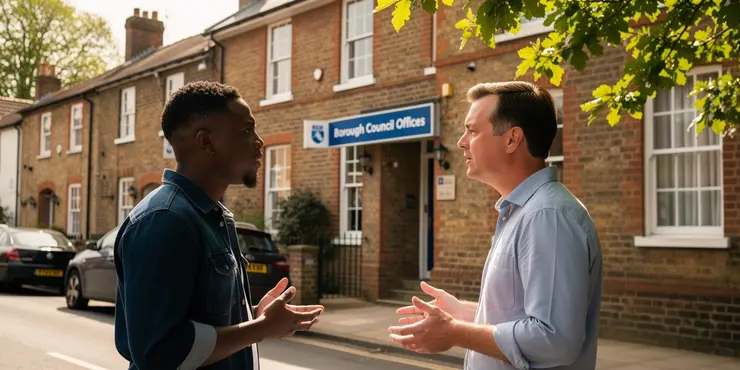
Local councils play an important part in tackling dangerous anti-social driving near homes, but they are not usually the main enforcement body. Their role is often focused on prevention, community safety, road design and working with partners such as the police. In many neighbourhoods, councils are the first place residents turn to when they want to report a problem.
They can help identify recurring issues such as speeding, dangerous manoeuvres, or vehicles gathering late at night. Councils may then use this information to decide whether traffic calming, signage, parking changes or more detailed monitoring is needed. Their work is often about reducing the conditions that allow dangerous driving to continue.
How councils respond to complaints
If residents report dangerous anti-social driving, the council may log the complaint and investigate patterns over time. This can include checking whether the issue is happening at certain hours, on specific roads, or near particular homes or estates. Councils may also ask for evidence such as dates, times, vehicle details, or dashcam footage.
In some cases, a council may arrange site visits or work with local ward councillors to understand the impact on residents. They may also share concerns with police, especially where driving appears reckless, noisy, or linked to public nuisance. Councils cannot usually stop a specific driver on the spot, but they can help build a stronger case for action.
Working with the police and other agencies
Dangerous anti-social driving is often a shared issue, so councils and police usually work together. The police have powers to deal with offences such as speeding, careless driving, dangerous driving, and vehicle-related antisocial behaviour. Councils support this by gathering local intelligence and coordinating responses.
They may also work with housing teams, environmental health officers, or community safety partnerships. This joined-up approach is useful where the problem is not just one driver, but repeated behaviour in a local area. Councils can help make sure the issue is treated as a neighbourhood concern rather than an isolated complaint.
Prevention and long-term solutions
One of the most important council roles is prevention. They can introduce measures such as speed bumps, road narrowing, safer crossings, lower speed limits, better lighting, or redesigned junctions. These changes can make it harder for drivers to behave dangerously near homes.
Councils may also support public awareness campaigns and resident engagement. In some areas, they use consultation to decide where changes are most needed and whether restrictions such as traffic orders are appropriate. While they cannot solve every incident immediately, councils can help create safer streets over time.
What residents can expect
Residents should expect the council to listen, record concerns, and help point them in the right direction. However, the council may not have the power to fine drivers or make arrests unless it is acting through specific enforcement functions. That is why reporting the issue to both the council and police is often the most effective approach.
If the problem continues, residents can ask their council what action has been taken and whether any road safety review is planned. Persistent complaints, backed by evidence from the community, are often what lead councils to take stronger action. In practice, local councils are a key part of making streets safer and more liveable.
Frequently Asked Questions
Dangerous anti-social driving local councils role refers to the ways local councils help respond to harmful driving behaviours in their area. This can include gathering reports, working with police and highways teams, supporting community safety measures, and helping design local traffic calming or enforcement responses.
Dangerous anti-social driving local councils role gives local councils a supporting role rather than direct police-style enforcement powers in most cases. Councils may use planning, traffic management, environmental health, and community safety powers, and they often coordinate with police or other agencies that hold direct enforcement powers.
Dangerous anti-social driving local councils role often includes creating reporting routes, collecting evidence from residents, and passing information to the appropriate authority. Councils may provide online forms, community safety contacts, or liaison officers to help residents report repeated dangerous or anti-social driving.
Residents should contact dangerous anti-social driving local councils role when the issue is ongoing, location-based, or linked to local traffic management, road design, or nuisance patterns. If there is an immediate danger, a serious collision, or a crime in progress, residents should contact the police or emergency services first.
Dangerous anti-social driving local councils role can support road safety improvements by identifying problem locations, analysing complaint patterns, and introducing measures such as speed management, signage, road layout changes, or traffic calming. Councils may also work with schools, residents, and transport teams to reduce risks.
Useful evidence for dangerous anti-social driving local councils role investigations can include dates, times, locations, vehicle registration numbers, photographs, dashcam footage, and witness statements. Clear and repeated reports help councils and partner agencies understand patterns and decide what action may be appropriate.
Dangerous anti-social driving local councils role does not usually mean the council itself can seize vehicles or issue driving fines. Those powers normally belong to the police or courts, although councils can support cases by sharing evidence, coordinating responses, and using related local enforcement tools where available.
Dangerous anti-social driving local councils role often works through partnership with police, sharing intelligence, prioritising hotspots, and coordinating action plans. Councils may help with environmental changes or local monitoring while police handle direct enforcement and criminal investigations.
Local prevention measures in dangerous anti-social driving local councils role can include speed bumps, road narrowing, improved lighting, signage, CCTV, parking controls, and better street design. Councils may also run awareness campaigns and community engagement to discourage harmful driving behaviour.
Dangerous anti-social driving local councils role addresses repeated complaints by tracking patterns, identifying hotspots, and deciding whether a coordinated response is needed. This may involve site visits, evidence collection, meetings with police, and targeted local measures to reduce the behaviour.
Dangerous anti-social driving local councils role may include responding to vehicle noise complaints when they are part of wider anti-social behaviour patterns. Councils can log complaints, investigate nuisance hotspots, and work with partner agencies on environmental or enforcement responses if the issue falls within local powers.
Dangerous anti-social driving local councils role can help vulnerable road users by improving crossing points, reducing traffic speeds, redesigning streets, and prioritising locations near schools, care homes, and cycling routes. Councils may also use community reporting to identify places where pedestrians and cyclists are at risk.
A resident should provide clear details such as the location, time, frequency, vehicle description, registration number if known, and what the driver did. If available, they should also provide photos, video, and information about any witnesses or impact on the community.
Dangerous anti-social driving local councils role can help assess speeding concerns near homes by collecting reports and reviewing local traffic data. Councils may then consider traffic calming, monitoring, or referral to police where enforcement is needed, especially if the issue is persistent or dangerous.
Dangerous anti-social driving local councils role can influence planning and road design by encouraging safer layouts that discourage speeding, racing, or careless manoeuvres. Councils may incorporate community safety concerns into development reviews, road improvements, and highway management decisions.
After a report is made through dangerous anti-social driving local councils role, the council typically logs the complaint, reviews any evidence, and checks whether the matter should be escalated or shared with police or another department. It may also monitor the area, contact residents for more information, or propose local measures.
Responsibility for dangerous anti-social driving local councils role is usually shared across community safety, highways, environmental health, and sometimes licensing or enforcement teams. The exact lead varies by council, but coordination with police and other agencies is common.
Dangerous anti-social driving local councils role can support neighbourhood safety campaigns by sharing information, organising meetings, promoting reporting channels, and backing targeted action in problem areas. Councils may also help residents understand what evidence to collect and how local responses are decided.
Legal limits on dangerous anti-social driving local councils role depend on the specific powers of the council and the issue involved. Councils must act within local government, traffic, and privacy rules, and many enforcement actions require police involvement or other statutory authority.
Dangerous anti-social driving local councils role can be improved through faster reporting routes, better data sharing, stronger partnership working, and clear public guidance. Councils can also improve outcomes by focusing on hotspot analysis, community engagement, and practical road safety measures.

Ergsy Search Results
This website offers general information and is not a substitute for professional advice.
Always seek guidance from qualified professionals.
If you have any medical concerns or need urgent help, contact a healthcare professional or emergency services immediately.
Some of this content was generated with AI assistance. We've done our best to keep it accurate, helpful, and human-friendly.
- Ergsy carefully checks the information in the videos we provide here.
- Videos shown by Youtube after a video has completed, have NOT been reviewed by ERGSY.
- To view, click the arrow in centre of video.
- Most of the videos you find here will have subtitles and/or closed captions available.
- You may need to turn these on, and choose your preferred language.
- Go to the video you'd like to watch.
- If closed captions (CC) are available, settings will be visible on the bottom right of the video player.
- To turn on Captions, click settings.
- To turn off Captions, click settings again.